דלג לתוכן האתר >
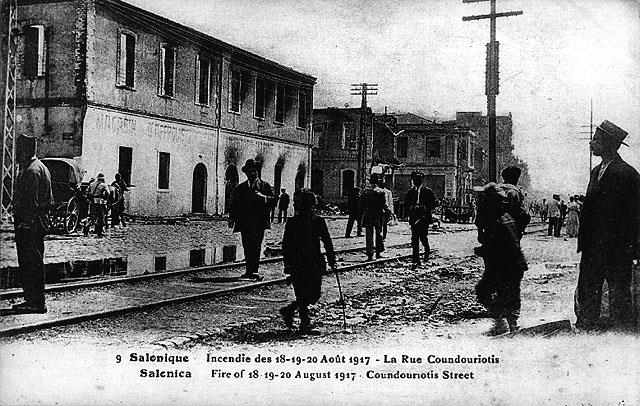
מראה שאלוניקי אחרי הדליקה הגדולה, יוון, אוגוסט 1917. גלויות

קהילת יהודי שאלוניקי

שאלוניקי - סאלוניקי

ביוונית: Θεσσαλονίκη

עיר-נמל ביוון.


את ייסוד הקהילה היהודית בסלוניקי מייחסים ליהודים שבאו מאלכסנדריה שבמצרים, באמצע המאה השנייה לפני הספירה. עם הקמת הקיסרות הביזאנטית (395 לספירה) נעשתה סלוניקי לעיר השנייה בגודלה במדינה (אחרי קושטא), והקהילה היהודית בה הייתה נתונה לרדיפות מצד השלטון הנוצרי הקנאי לאורך כל התקופה עד הפלתו בידי הטורקים בשנת 1430.

היהודים היו סוחרים ברובם, בעיקר בענף המשי. מהתקופה הביזאנטית נשתמרו עד תחילת המאה העשרים שני בתי הכנסת העתיקים ביותר בעיר, "עץ החיים" ו"עץ דעת".

יהודים מהונגריה השתקעו בעיר עוד בשנות ה-70 של המאה ה-14. ארבעים שנה אחרי הכיבוש הטורקי הגיעו מהגרים מבאוואריה והקימו קהילה אשכנזית בצד הרומאניוטית הקיימת. הקהילה שמרה על ייחודה, עד שנתפזרה בתחילת המאה ה-20.

בשנת 1493 הגיעו לסאלוניק יהודים ממגורשי ספרד וב- 1536 הגיעו יהודים ממגורשי ספרד ופורטוגאל. יהודים אלה הקימו בתי-כנסת משלהם ("קהל קדוש") על שמות מקום מוצאם (למשל, סיציליה, קאלאבריה, מאיורקה, ליסבון). בעיני הרבנות המקומית נחשבו האנוסים כיהודים לכל דבר.

כלל האוכלוסייה היהודית בסלוניקי באמצע המאה ה-16 נאמד ב-20,000. בזכות קשריהם ההדוקים עם קהילות צרפת, הולאנד, מצרים וערי איטליה, בפרט ונציה, היה לסוחרי סלוניקי יתרון רב במסחר הבין-לאומי. יהודים הצטיינו גם באריגת דברי משי, בצביעת צמר ובייצור תכשיטים; גם במכרות הזהב והכסף בסביבה עבדו יהודים רבים. היו אז בסלוניקי כשלושים עדות יהודיות ומדי פעם היו מתכנסים ראשי העדות ומחליטים על תקנות לכלל הקהילה (הם היו נבחרים על-ידי כלל העדה ונודעו בשם פרנסים, ממונים, נבחרים ואנשי-מעמד). הפרנסים היו קובעים את שיעורי המס לשלטונות מכל עדה ועדה. העיר נעשתה מקום תורה וקבלה, והיו בה חכמים דוגמת ר' שלמה הלוי אלקבץ בעל "לכה דודי", יצחק אדרבי בעל "דברי ריבות" ו"דברי שלום", משה אלמושנינו ובעל השו"ת שמואל די מדינה (הרשד"ם). מלבד ישיבות התקיימו בעיר בית-מדרש לפיוטים ולזמרה ובית-אולפנה למדעים, שבו לימד הרופא אמאטוס לוזיטאנוס בסוף שנות החמישים של המאה ה- 16.

בתחילת המאה ה-17 פקדו את העיר מגיפות ודליקות אך הקהילה הוסיפה לשגשג; יהודים המשיכו ביצוא תבואה, כותנה, צמר, משי ואריגים ונשים יהודיות התמחו בגידול טבק. באמצע המאה היו 30,000 היהודים מחצית האוכלוסייה בסלוניקי. עם התחלת השפל בקיסרות העותמאנית בסוף אותה מאה חלה ירידה גם בתנועת המסחר אבל הקהילה הוסיפה להיות אבן-שואבת לתלמידי-חכמים, דוגמת ר' חיים שבתאי בעל "תורת החיים", ר' אהרון כהן פרחיה בעל "פרח מטה אהרון" ודוד קונפורטי בעל "קורא הדורות".

האירוע המרכזי בחיי הקהילה במאה ה-17 חל בבואו של שבתאי צבי (1657); הוא גורש מן העיר על דעת גדולי הרבנים אבל אחרי מותו התאסלמו כמוהו 300 משפחות מבני המקום וכך נולדה כת ה"דונמה" (מומרים בטורקית) שהתפשטה לקושטא ולמקומות אחרים. בעקבות הסערה סביב שבתאי צבי התאחדו 30 העדות היהודיות בסלוניקי לקהילה אחת, ובראשה שלושה רבנים קבועים, וכל בתי-הדין בקהילה אורגנו מחדש על-פי שלוש חטיבות לדיני אישות, חזקות, איסור והיתר. רבים היו המוסלמים והיוונים שהעדיפו בתי-דין אלה על פני מערכת המשפט הטורקית.

בשנות ה-20 של המאה הגיעו לסלוניקי אנוסים מפורטוגאל ("פראנקוס"), רובם סוחרים עשירים ובנקאים, בהתחלה הם סרבו לקבל עליהם את דין הקהילה. במרוצת הזמן הצטמצם לימוד התורה בעיר, והיו מקרים של התערבות השלטונות בענייני פנים, באימפריה בכלל ובקיבוץ היהודי בטורקיה בפרט.

במחצית השנייה של המאה ה-19 הקימה חברת "כל ישראל חברים" בית-ספר ראשון בסלוניקי (1873), צעירים יצאו ללמוד רפואה במערב, הוקם בנק מרכזי.

ב-1887 בוטלה שלישיית הרבנים ויעקב קובו נתמנה "חכם באשי" (רב ראשי); ב- 1899 נוסדה חברה להפצת הלשון העברית, בהנהגת יצחק אפשטיין.

בתחילת המאה העשרים מנתה האוכלוסיה היהודית 80,000 (מתוך 173,000). כאשר הגיעו לשלטון "הטורקים הצעירים" (1908) פתחו בגיוס לא-מוסלמים לצבא וצעירים יהודים שלא רצו להתגייס היגרו לארצות הברית. במשטר החדש התארגנו בעיר אגודות ציוניות וסוציאליסטיות, ויהודים חדרו לכל ענפי המשק ולמקצועות החופשיים. בימי שבת בנמל סלוניקי פסקה כל עבודה.

הצבא היווני נכנס לסלוניקי ב-1912 והמיעוטים, ובכללם היהודים, הושוו בזכויותיהם עם שאר תושבי יוון. ב-1917 פרצה דליקה ברוב חלקי העיר ו-50,000 יהודים נשארו ללא קורת-גג. רבים היגרו לאחר שהממשלה סירבה לשקמם במקומותיהם הישנים; אחרים עזבו ב-1922 בגלל איסור עבודה בימי ראשון, רובם לפאריס, לא מעטים עלו לארץ ישראל, ביניהם משפחות פלורנטין, ריקנאטי, מולכו ועוזיאל, והם תרמו רבות לפיתוחה של תל-אביב.

ב-1933 הביא אבא חושי 300 עובדי-נמל לחיפה מסלוניקי, ובזכותם נכבש נמל חיפה לעבודה עברית, ונתאפשרה הפעלת הנמל בתל-אביב (ב- 1936).

ב-1935 עדיין ישבו בסלוניקי כ-60,000 יהודים. ובערך כזה היה מספרם ערב פרוץ מלחמת העולם השנייה (ספטמבר 1939).


תקופת השואה

הגרמנים נכנסו לסלוניקי ב-9 באפריל 1941. כעבור יומיים סגרו את העתון היהודי היחיד בעיר ("מסאג'ירו") והחרימו בנייני ציבור, לרבות בית-חולים ע"ש הבארון הירש. חברי ועד הקהילה נעצרו ולראש הקהילה נתמנה אדם חדש. על היהודים נאסר לבקר בבתי-קפה ולהחזיק מקלטי רדיו.

בקיץ 1942 נשלחו כ-7,000 גברים לעבודות כפייה, ייבוש שטחים נגועים במאלאריה; תוך עשרה שבועות מתו %12 מהם. בתום מו"מ שוחררו היהודים מעבודות-כפייה תמורת כופר עצום. הפקעות של רכוש יהודי נמשכו, ובדצמבר אותה שנה נמסרו כחצי מיליון המציבות היהודיות בבית-העלמין הישן לעבודות סלילה ובנייה ברחבי העיר. ספריות עתיקות נשדדו והועברו למכון המחקר בפראנקפורט. בתחילת פברואר באו לסלוניקי הנאצים דיטר ויסליצני ואלויס ברונר וכעבור יומיים הונהגה חובת ענידת ה"טלאי הצהוב" וסימון בתי עסק יהודיים. נאסר על היהודים לצאת בלילות, להשתמש בטלפון או בכלי תחבורה כלשהם. במרס הוטל על הקהילה (שהייתה אוטונומית כביכול, ולה משטרה משלה) למכור את כל הרכוש היהודי ןלהפקיד את התמורה בבנקים; כמאה נכבדים יהודים נקבעו כבני-ערובה לביצוע הפקודה. בראש הקהילה כבר עמד אז הרב צבי קורץ, והוא הקפיד על ציות לגרמנים בכל מחיר.

ב-15 במרס אספו הגרמנים 2,500 מיהודי סלוניקי ושילחו אותם למחנה אושוויץ. במשך מרס אפריל ותחילת מאי 1942, שולחו לשם יהודים גם ממקומות אחרים במאקדוניה. בסך-הכל שולחו לאושוויץ 19 קבוצות כאלה, והקיפו 43,850 אנשים. 5,000 היהודים שלא נשלחו למחנות-ההשמדה מצאו את מותם במחנות-העבודה. מעט יהודים מצאו מקלט בכפרים או באתונה.


אחרי המלחמה התרכזו בסלוניקי כאלפיים יהודים משארית-הפליטה, רובם מערי-השדה.

ב-1971 נותרו בעיר כ-1,500 יהודים ושני בתי-כנסת, שהיו בשימוש בשבתות ובמועדי ישראל. חינוך יהודי ניתן על- ידי מורים מישראל והתקיים במקום מועדון נוער וספורט של "מכבי".

בשנת 1997 התגוררו בסלוניקי 1,000 יהודים. ביון כולה נימנו באותה השנה 5,000 יהודים.

Ben Solomon Aaron Amarillo (1700-1772), rabbi, Talmudic author and a halakhic authority born in Salonika, Greece (then part of the Ottoman Empire). Amarillo spent his whole life in Salonika, where he studied under David Serero. Amarillo was rabbi during the economic crisis of 1756; he suggested the remission of all debts which led to an immediate improvement of economic conditions within the community. On the death of Isaac b. Shangi in 1761, he was appointed one of the three chief rabbis of Salonika (as his father had been before him), serving together with R. Benvenisti Gatigno and R. Eliezer Raphael Nahmias. Amarillo authored the responsa Penei Aaron (published in 1796) and also wrote laws about divorce. His brother was Rabbi Haim Moshe ben Solomon (1695-1748), the author of the responsa D’var Moshe (1742, 1743 and 1750).

Emmanuel Salem (1859-1940), jurist, born in Salonika, Greece (then part of the Ottoman Empire). He specialised in International Law and especially the Concessions granted by successive Sultans to Christian nations, conferring rights and privileges in favor of their subjects resident or trading in the Ottoman dominions. He became the legal advisor to foreign consuls an offered advise whenever there were disagreements between the Ottoman authorities and these diplomats. His work and conclusions on the conditions of these concessions and of the position of foreign nationals was published in 1888-1901 in the Paris "Journal de Droit Prive".

In 1908 Salem was asked by the Young Turks to help in dealing with the public debt and also the reorganization of major banks and railways. He was then appointed to be a member of the council of the Young Turks on legislative reform. Salem participated in the 1922 Treaty of Lausanne and helped to resolve a number of problems of international law. Pope Leo III awarded him the Order of the Holy See of Pius IX for his services to the Catholic authorities in their disputes with the Ottomans. The Italian government also awarded him the La Croce del Cavaliere della Coronna d’Italia for his services also relating to the Concessions. A man of great intelligence and a phenomenal memory he also received honours from the governments of Belgium, Austria, Greece, Bulgaria and of Turkey.

Active also in the private and public sectors Salem helped establish corporations in Thessaloniki for running the water, gas and electricity industries. He wrote the founding charters for several industrial companies, banks and trading concerns. He was the legal advisor to the Allatini family and founded several benevolent associations.

He lived in Paris, France, towards the end of his life and became there president of the Sephardic Jewish Council and the central council of the Alliance Israelite Universelle.

Daniel Carasso (1905-2009), businessman, member of well-known Sephardic family, born in Salonika, Greece (then part of the Ottoman Empire). Daniel was son of physician Isaac Carasso who together with his family moved to Barcelona in 1916 and who began to sell yoghurt as a medicine to aid patients with digestive problems. The young Carasso enrolled at business school in Marseilles, France, and in order to develop the family business studied bacteriology at the Pasteur Institute in Paris.

Carasso took over the management of the business in Spain and then, in 1929, he opened a branch in France. In 1941, in order to avoid arrest by the Nazis, he fled to the USA. There, together with two family friends, he bought a small Greek yoghurt company which developed into the Dannon Milk Products Company in New York.

In 1951, Daniel Carasso returned to Paris to manage the family's businesses in France and Spain, while the American business was sold in 1959. In Europe in 1967, Danone merged with Gervais, the leading fresh cheese producer in France and became Gervais Danone. The Danone group, headquartered in Paris, has grown through an aggressive policy of acquisitions and product development. In the 2000s it claimed to be the world leader in the production of fresh dairy products, biscuits and cereals and bottled water. The company has subsidiaries and licensees in many countries.

In Israel it owns 20% of the Strauss group of companies.
Carasso died in his home in Paris at the age of 104.

Jacques Stroumza (1913-2010), engineer and amateur musician who was saved from death in Auschwitz by playing the violin in Birkenau concentration camp, born in Thessaloniki, Greece. His father being a school teacher and his mother a milliner, Stroumza, the eldest of four children, was born to a middle class family. After completing studies at a local secondary school he went to Marseilles, France, to study engineering while he also took violin lessons as a hobby. He went on to complete his engineering studies in Paris but he also continued to develop his musical talents there. In 1935 Stroumza returned to Greece to perform his military service. He was posted to the infantry, but also played the violin in the military orchestra. On his release he found work as an engineer and took lessons in German.

On the outbreak of World War II Stroumza was enlisted in the Greek army and fought in the battles in Albania in 1940. With the defeat of Greece and its occupation by Germany in 1941, he was demobilized and married Nora Murdoch a violinist.

In 1943 Stroumza, his pregnant wife, two sisters and one brother, his parents in law and many other family members were arrested and on 28th April 1943 they were all transported to Auschwitz. His wife and most other family members were killed within a few hours of their arrival. Only his sisters and he survived. The same day a Polish kapo (himself a pianist) suddenly asked if he played a musical instrument. A violin was produced and after a short impromptu ‘audition’ he joined the Birkenau men’s orchestra as first violinist. They had to play military marches every day when the prisoners left and returned to the camp and on Sundays they sometimes performed in the camp hospital. Their playing of Mozart made the sick feel better. As he noted in his book “You Choose Life”, published in 1998, that ‘music enabled me to suffer the unbearable’.

After a few months Stroumza was transferred to a metal factory making hand grenades for the Nazi war machine and after some time became the factory engineer. As such he was better fed and clothed than other prisoners and he was able to persuade the boss to employ his sister Bella. On 19th January 1945, when the Germans knew that the ring was closing around them, Stroumza was forced to join a death march to Mathausen where he was liberated by American troops on 8th May, 1945.

He returned to Paris where he recovered his health, found work as an engineer and started to play the violin once again. He met another survivor from Athens, Lora Saporta. They married in 1947. They had three children. ‘We both felt that having children would be the ultimate victory over the Nazis,’ he said later. For two years the couple lived in Algeria. Stroumza first visited Israel in 1961 and his children came to live there shortly afterwards. Parents Jacques and Lora made aliya to Israel in 1967 when Jacques found work as lighting engineer for the Jerusalem municipality. He designed the lighting of the walls of the Old City. In 1983, aged 70, he was awarded a doctorate degree at the Technion in Haifa.
After his retirement in 1979, Stroumza started to work with Jewish and non-Jewish youth to increased their awareness of the Shoa. “I have a need to tell and retell my story, so the world will know,” he said. “The main thing is not to forget. If we forget the Holocaust it is if we forget that we are Jews.” He addressed groups of young people throughout Israel and Europe- always bringing with him his violin. “If I am alive today it is because of my violin”, he would tell each audience. Stroumza’s rendition of "Ani Maamin…" ["I believe with complete faith…"] was always a very moving experience for his listeners. He appeared with his daughter Margo in an Israel television film ‘Salonika-Auschwitz’. When becoming involved with Holocaust commemoration he discovered the interest of many people in the fate of the Sephardic community of Thessaloniki where some 80,000 Jews had lived before World War I and which was almost entirely destroyed by the Nazis. His full story is related the book ‘Violinist in Auschwitz: From Salonika to Jerusalem’, published in 1996. In 2005 he was guest of honour at a Spanish memorial ceremony held in Madrid and attended by the King and Queen of Spain, to recall the horrors of the Holocaust. The ceremony was intended also a gesture of reconciliation towards the Jews who had been banished from Spain in 1492.

Stroumza daughter Margo lives in Tzur Hadassa, his son Guy is professor of Byzantine History at the Hebrew University of Jerusalem.

Isaac Carasso (1874-1939), medical doctor and member of well known Sephardi family, born in Salonika, Greece (then part of the Ottoman Empire). He moved with his family to Barcelona, Spain, following the incorporation of Salonika to the Greek state in early 20th century.

When he established his practice Carasso noted that many patients suffering from digestive and intestinal problems were helped by eating the sour milk and yoghurt which was popular in the Balkans. He started to manufacture it and sold it through pharmacies as a medicine. Carasso then founded a yoghurt factory which he called Danone, the Ladino diminutive of Daniel, his son's name. This small business developed into the Danone food group of companies. The company grew into the international Danone group managed by Isaac’s son Daniel.

Emanuel Carasso (1862-1934), lawyer and statesman born in Salonika, Greece (than part of the Ottoman Empire). Carasso taught criminal law at the University of Salonika. He was one of the first non-Moslems members of the Ottoman Freedom Society which became part of the Committee of Union and Progress. As such he joined the Young Turks movement and in 1908 was elected one of the six deputies who represented the city of Salonika in the Ottoman parliament. When asked to become a member of the government he refused. He was one of the three members of the parliamentary committee which informed Sultan Abdul Hamid II, the last Ottoman sultan to rule with absolute power, of his deposition in 1909. In 1910 he was invited to direct the ministry of Commerce and Public Affairs, but once again he declined. He was a member of the committee which negotiated the peace treaty between Italy and Turkey after the 1912 war and was also closely involved in the negotiations which were designed to internationalize Salonika. In recognition of his services he was awarded a concession to export Turkish goods to Germany.

Carasso was one of the founders of the Macedonian Risorta Masonic Lodge in Thessaloniki. Later he became president of the Lodge. The Masonic Lodges and other secret societies became the meeting places for sympathizers of the Young Turk movement. He worked for the coordination of the activities of Jewish organizations in Turkey. Strenuously opposing Zionist settlement in Ottoman Palestine, he believed that Jews should be Turks first and Jews only second.

After Kemal Ataturk came to power in 1923, Carasso lost influence. He went to live in Italy an died in Trieste in 1934. He was buried in the Jewish cemetery in Arnvutkoy, Istanbul. His nephew Isaac Carasso was the founder of the Danone food group.

David Conforte (c.1618– c.1685), Hebrew literary historian, born in Salonika, Greece (then part of the Ottoman Empire), author of the literary chronicle known by the title Ḳore ha-Dorot.

Conforte came of a family of scholars. His early instructors were rabbis Israel Zeevi, Judah Girasi and Baruch Angel. As a young man he studied Kabbala under Rabbi Jefeth the Egyptian, and philosophy under Rabbi Levi Pasriel. His chief teachers, however, were Mordecai Kalai and Daniel Estroza. Conforte married a granddaughter of Menachem Lonzano. He journeyed twice to Palestine, once in 1644, alone, and a second time in 1652, when, together with his family, he settled in Jerusalem, founding there a study hall. In 1671, however, he was in Egypt, where he occupied the position of dayan (judge in a rabbinical court).

Conforte's chief work is a literary chronicle now known by the title "Kore ha-Dorot", which contains the names of all the teachers and writers from the close of theTalmud up to his own day. This chronicle is divided into three parts, the first two of which, referring to the time before the expulsion of the Jews from Spain in 1492, are very short. The third part is divided into eleven generations, and is not systematically arranged. Conforte used all the earlier historical works, such as Abraham Ibn Daud's "Sefer ha-Kabbalah" and Zacuto's "Yuhasin" especially the first mentioned, from which he cites whole passages. He also gathered material from various printed and manuscript responsa, and was the first to collect the names mentioned in these works. His chronicle is valuable for the literary history of theJews in the 16th and 17th centuries, especially in Turkey, Italy, Africa, and the Middle East. Conforte was a mere compiler, and at times his data are contradictory.

Mehmed Javid Bey (1875–1926), Ottoman economist and statesman, born in Salonica, Greece (then part of the Ottoman Empire) to a family of Doenmeh, a group of crypto-Jews in the Ottoman Empire who openly affiliated with Islam and secretly practiced a form of Judaism called Sabbateanism. Javid worked for the Agriculture Bank and Education Ministry after graduating from the Imperial Civil Servants School in Istanbul in 1896. Six years later he returning to Salonica to head a private school there. He became active in the Young Turk movement. After the 1908 Revolution, he was elected to the Ottoman parliament, where he served from 1908 to 1918. An accomplished orator and able economist, he served as finance minister in five cabinets, where he was responsible for bringing order to the finances of the empire. Thanks to his efforts vital foreign loans were obtained and investor confidence in the Ottoman government was restored.

The combination of his personality, religious and national origins, and politics made him the target of numerous accusations of corruption, espionage, even murder. In 1914 he resigned his position in protest against the secret Ottoman-German alliance, although he remained a financial adviser to the government. He was reappointed his ministerial post in 1917. After the war he went into hiding in Istanbul and then fled to Switzerland after his offer to join the Nationalist Forces in Anatolia was rejected. He lived in Switzerland for several years and returned to Istanbul in 1922. He was a member of the Ottoman delegation at Lausanne in 1921, but fell out with Ismet Inönü. After Turkey's independence, he briefly flirted with politics but did not pursue the idea. In 1926 he was arrested after an attempt on Mustafa Kemal's life; he was convicted of sedition and executed, although no serious evidence was brought. He wrote several textbooks on economics and statistics. His memoirs were published in 1946.

Raphael Salem (1898-1963), mathematician, born in Salonika, Greece (then part of the Ottoman Empire). He was the son of Emanuel Salem, the well known Jewish lawyer who specialized in solving problems between the Ottoman Empire and European countries.

When his family moved to France in 1913, Salem started to study law at the University of Paris possibly as a result of family pressure. He graduated in 1919, but he was more interested in mathematics and engineering which he studied in parallel. He graduated in sciences in the Sorbonne in 1919 and then two years later he was awarded a degree in engineering. Salem then proceeded to work in banking, maybe also because of family preferences, and by 1938 he became one of the managers of Banque de Paris et de Pays Bas.

In his free time however he continued to work on mathematical problems and in particular the Fourier series, named after 18th century French mathematician Jean Baptiste Fourier. Salem was fascinated by the series which are used in the analysis of periodic functions. Many of the phenomena studied in engineering and science are periodic in nature such as the current and voltage in an alternating current circuit. These periodic functions can be analyzed into their constituent components (fundamentals and harmonics) by a process called Fourier analysis. Salem made a significant contribution to the understanding of the series a and its implications.

In 1939 he was called up for military service and was sent to England to assist the head of the Franco-British coordinating committee but was demobilized in June 1940, when France was defeated. By this time his father had died but his mother, sister and her family were all arrested and murdered by the Nazis. Salem determined to flee to the USA. Shortly before leaving for the USA In 1940, however, the University of Paris awarded him a doctorate in mathematics for his spare time work on the Fourier series.

In 1941, having met up with his family, Salem settled in Cambridge, Mass., and was appointed a lecturer at the MIT. In short order he became an assistant and then, in 1946, associate professor of mathematics. In 1950 he was made a full professor at MIT, but he longed to return to France. He was at the same time appointed Professor at the University of Caen in France and he began to split his time between France and the USA. In 1958 he was appointed professor at the Sorbonne. For the remainder of his life he lived permanently in France. After Salem died his wife established an international prize for outstanding contributions to the study of the Fourier series.

וייסיד, ויסיד

VEISSID, VEISID

שמות משפחה נובעים מכמה מקורות שונים. לעיתים לאותו שם קיים יותר מהסבר אחד. שם משפחה זה נגזר מתכונה או כינוי אישי, או מתואר או מונח אחר אשר תיאר את מעמדה החברתי של המשפחה במסגרת הקהילה היהודית.

שם המשפחה זה נוצר משתי מצירוף שתי מלים: ויי, שפירושה בשפה הקטלנית "זקן", "ישן", וסיד, ולפעמים סידי, שם פרטי שהיה נפוץ בספרד בימי הביניים ואשר נגזר מהתואר הערבי סעיד, שפירושו "אדון". הפירוש המילולי של השם סיד הוא "אדון". סידי הוא שם מקביל לתואר הספרדי מונסיניור שניתן לנוצרים והודים מן המעמד הגבוה. בספרד החל מהמאה ה-13 תארים וכינויים רבים התקבלו כשמות משפחה קבועים.

בעידן המודרני שם המשפחה וייסיד היה נפוץ אצל יהודי סלוניקי, יוון.

ויסיד מתועד כשם משפחה יהודי עם אלברט אברהם ויסיד אשר נולד בסלוניקי בשנת 1900 ונרצח במחנה המוות הנאצי באושוויץ.

מאגרי המידע של אנו
גנאלוגיה יהודית
שמות משפחה
קהילות יהודיות
תיעוד חזותי
מרכז המוזיקה היהודית
מקום
אA
אA
אA
קהילת יהודי שאלוניקי

שאלוניקי - סאלוניקי

ביוונית: Θεσσαλονίκη

עיר-נמל ביוון.


את ייסוד הקהילה היהודית בסלוניקי מייחסים ליהודים שבאו מאלכסנדריה שבמצרים, באמצע המאה השנייה לפני הספירה. עם הקמת הקיסרות הביזאנטית (395 לספירה) נעשתה סלוניקי לעיר השנייה בגודלה במדינה (אחרי קושטא), והקהילה היהודית בה הייתה נתונה לרדיפות מצד השלטון הנוצרי הקנאי לאורך כל התקופה עד הפלתו בידי הטורקים בשנת 1430.

היהודים היו סוחרים ברובם, בעיקר בענף המשי. מהתקופה הביזאנטית נשתמרו עד תחילת המאה העשרים שני בתי הכנסת העתיקים ביותר בעיר, "עץ החיים" ו"עץ דעת".

יהודים מהונגריה השתקעו בעיר עוד בשנות ה-70 של המאה ה-14. ארבעים שנה אחרי הכיבוש הטורקי הגיעו מהגרים מבאוואריה והקימו קהילה אשכנזית בצד הרומאניוטית הקיימת. הקהילה שמרה על ייחודה, עד שנתפזרה בתחילת המאה ה-20.

בשנת 1493 הגיעו לסאלוניק יהודים ממגורשי ספרד וב- 1536 הגיעו יהודים ממגורשי ספרד ופורטוגאל. יהודים אלה הקימו בתי-כנסת משלהם ("קהל קדוש") על שמות מקום מוצאם (למשל, סיציליה, קאלאבריה, מאיורקה, ליסבון). בעיני הרבנות המקומית נחשבו האנוסים כיהודים לכל דבר.

כלל האוכלוסייה היהודית בסלוניקי באמצע המאה ה-16 נאמד ב-20,000. בזכות קשריהם ההדוקים עם קהילות צרפת, הולאנד, מצרים וערי איטליה, בפרט ונציה, היה לסוחרי סלוניקי יתרון רב במסחר הבין-לאומי. יהודים הצטיינו גם באריגת דברי משי, בצביעת צמר ובייצור תכשיטים; גם במכרות הזהב והכסף בסביבה עבדו יהודים רבים. היו אז בסלוניקי כשלושים עדות יהודיות ומדי פעם היו מתכנסים ראשי העדות ומחליטים על תקנות לכלל הקהילה (הם היו נבחרים על-ידי כלל העדה ונודעו בשם פרנסים, ממונים, נבחרים ואנשי-מעמד). הפרנסים היו קובעים את שיעורי המס לשלטונות מכל עדה ועדה. העיר נעשתה מקום תורה וקבלה, והיו בה חכמים דוגמת ר' שלמה הלוי אלקבץ בעל "לכה דודי", יצחק אדרבי בעל "דברי ריבות" ו"דברי שלום", משה אלמושנינו ובעל השו"ת שמואל די מדינה (הרשד"ם). מלבד ישיבות התקיימו בעיר בית-מדרש לפיוטים ולזמרה ובית-אולפנה למדעים, שבו לימד הרופא אמאטוס לוזיטאנוס בסוף שנות החמישים של המאה ה- 16.

בתחילת המאה ה-17 פקדו את העיר מגיפות ודליקות אך הקהילה הוסיפה לשגשג; יהודים המשיכו ביצוא תבואה, כותנה, צמר, משי ואריגים ונשים יהודיות התמחו בגידול טבק. באמצע המאה היו 30,000 היהודים מחצית האוכלוסייה בסלוניקי. עם התחלת השפל בקיסרות העותמאנית בסוף אותה מאה חלה ירידה גם בתנועת המסחר אבל הקהילה הוסיפה להיות אבן-שואבת לתלמידי-חכמים, דוגמת ר' חיים שבתאי בעל "תורת החיים", ר' אהרון כהן פרחיה בעל "פרח מטה אהרון" ודוד קונפורטי בעל "קורא הדורות".

האירוע המרכזי בחיי הקהילה במאה ה-17 חל בבואו של שבתאי צבי (1657); הוא גורש מן העיר על דעת גדולי הרבנים אבל אחרי מותו התאסלמו כמוהו 300 משפחות מבני המקום וכך נולדה כת ה"דונמה" (מומרים בטורקית) שהתפשטה לקושטא ולמקומות אחרים. בעקבות הסערה סביב שבתאי צבי התאחדו 30 העדות היהודיות בסלוניקי לקהילה אחת, ובראשה שלושה רבנים קבועים, וכל בתי-הדין בקהילה אורגנו מחדש על-פי שלוש חטיבות לדיני אישות, חזקות, איסור והיתר. רבים היו המוסלמים והיוונים שהעדיפו בתי-דין אלה על פני מערכת המשפט הטורקית.

בשנות ה-20 של המאה הגיעו לסלוניקי אנוסים מפורטוגאל ("פראנקוס"), רובם סוחרים עשירים ובנקאים, בהתחלה הם סרבו לקבל עליהם את דין הקהילה. במרוצת הזמן הצטמצם לימוד התורה בעיר, והיו מקרים של התערבות השלטונות בענייני פנים, באימפריה בכלל ובקיבוץ היהודי בטורקיה בפרט.

במחצית השנייה של המאה ה-19 הקימה חברת "כל ישראל חברים" בית-ספר ראשון בסלוניקי (1873), צעירים יצאו ללמוד רפואה במערב, הוקם בנק מרכזי.

ב-1887 בוטלה שלישיית הרבנים ויעקב קובו נתמנה "חכם באשי" (רב ראשי); ב- 1899 נוסדה חברה להפצת הלשון העברית, בהנהגת יצחק אפשטיין.

בתחילת המאה העשרים מנתה האוכלוסיה היהודית 80,000 (מתוך 173,000). כאשר הגיעו לשלטון "הטורקים הצעירים" (1908) פתחו בגיוס לא-מוסלמים לצבא וצעירים יהודים שלא רצו להתגייס היגרו לארצות הברית. במשטר החדש התארגנו בעיר אגודות ציוניות וסוציאליסטיות, ויהודים חדרו לכל ענפי המשק ולמקצועות החופשיים. בימי שבת בנמל סלוניקי פסקה כל עבודה.

הצבא היווני נכנס לסלוניקי ב-1912 והמיעוטים, ובכללם היהודים, הושוו בזכויותיהם עם שאר תושבי יוון. ב-1917 פרצה דליקה ברוב חלקי העיר ו-50,000 יהודים נשארו ללא קורת-גג. רבים היגרו לאחר שהממשלה סירבה לשקמם במקומותיהם הישנים; אחרים עזבו ב-1922 בגלל איסור עבודה בימי ראשון, רובם לפאריס, לא מעטים עלו לארץ ישראל, ביניהם משפחות פלורנטין, ריקנאטי, מולכו ועוזיאל, והם תרמו רבות לפיתוחה של תל-אביב.

ב-1933 הביא אבא חושי 300 עובדי-נמל לחיפה מסלוניקי, ובזכותם נכבש נמל חיפה לעבודה עברית, ונתאפשרה הפעלת הנמל בתל-אביב (ב- 1936).

ב-1935 עדיין ישבו בסלוניקי כ-60,000 יהודים. ובערך כזה היה מספרם ערב פרוץ מלחמת העולם השנייה (ספטמבר 1939).


תקופת השואה

הגרמנים נכנסו לסלוניקי ב-9 באפריל 1941. כעבור יומיים סגרו את העתון היהודי היחיד בעיר ("מסאג'ירו") והחרימו בנייני ציבור, לרבות בית-חולים ע"ש הבארון הירש. חברי ועד הקהילה נעצרו ולראש הקהילה נתמנה אדם חדש. על היהודים נאסר לבקר בבתי-קפה ולהחזיק מקלטי רדיו.

בקיץ 1942 נשלחו כ-7,000 גברים לעבודות כפייה, ייבוש שטחים נגועים במאלאריה; תוך עשרה שבועות מתו %12 מהם. בתום מו"מ שוחררו היהודים מעבודות-כפייה תמורת כופר עצום. הפקעות של רכוש יהודי נמשכו, ובדצמבר אותה שנה נמסרו כחצי מיליון המציבות היהודיות בבית-העלמין הישן לעבודות סלילה ובנייה ברחבי העיר. ספריות עתיקות נשדדו והועברו למכון המחקר בפראנקפורט. בתחילת פברואר באו לסלוניקי הנאצים דיטר ויסליצני ואלויס ברונר וכעבור יומיים הונהגה חובת ענידת ה"טלאי הצהוב" וסימון בתי עסק יהודיים. נאסר על היהודים לצאת בלילות, להשתמש בטלפון או בכלי תחבורה כלשהם. במרס הוטל על הקהילה (שהייתה אוטונומית כביכול, ולה משטרה משלה) למכור את כל הרכוש היהודי ןלהפקיד את התמורה בבנקים; כמאה נכבדים יהודים נקבעו כבני-ערובה לביצוע הפקודה. בראש הקהילה כבר עמד אז הרב צבי קורץ, והוא הקפיד על ציות לגרמנים בכל מחיר.

ב-15 במרס אספו הגרמנים 2,500 מיהודי סלוניקי ושילחו אותם למחנה אושוויץ. במשך מרס אפריל ותחילת מאי 1942, שולחו לשם יהודים גם ממקומות אחרים במאקדוניה. בסך-הכל שולחו לאושוויץ 19 קבוצות כאלה, והקיפו 43,850 אנשים. 5,000 היהודים שלא נשלחו למחנות-ההשמדה מצאו את מותם במחנות-העבודה. מעט יהודים מצאו מקלט בכפרים או באתונה.


אחרי המלחמה התרכזו בסלוניקי כאלפיים יהודים משארית-הפליטה, רובם מערי-השדה.

ב-1971 נותרו בעיר כ-1,500 יהודים ושני בתי-כנסת, שהיו בשימוש בשבתות ובמועדי ישראל. חינוך יהודי ניתן על- ידי מורים מישראל והתקיים במקום מועדון נוער וספורט של "מכבי".

בשנת 1997 התגוררו בסלוניקי 1,000 יהודים. ביון כולה נימנו באותה השנה 5,000 יהודים.

חובר ע"י חוקרים של אנו מוזיאון העם היהודי
בן שלמה אהרון אמריליו

Ben Solomon Aaron Amarillo (1700-1772), rabbi, Talmudic author and a halakhic authority born in Salonika, Greece (then part of the Ottoman Empire). Amarillo spent his whole life in Salonika, where he studied under David Serero. Amarillo was rabbi during the economic crisis of 1756; he suggested the remission of all debts which led to an immediate improvement of economic conditions within the community. On the death of Isaac b. Shangi in 1761, he was appointed one of the three chief rabbis of Salonika (as his father had been before him), serving together with R. Benvenisti Gatigno and R. Eliezer Raphael Nahmias. Amarillo authored the responsa Penei Aaron (published in 1796) and also wrote laws about divorce. His brother was Rabbi Haim Moshe ben Solomon (1695-1748), the author of the responsa D’var Moshe (1742, 1743 and 1750).

עמנואל סלם

Emmanuel Salem (1859-1940), jurist, born in Salonika, Greece (then part of the Ottoman Empire). He specialised in International Law and especially the Concessions granted by successive Sultans to Christian nations, conferring rights and privileges in favor of their subjects resident or trading in the Ottoman dominions. He became the legal advisor to foreign consuls an offered advise whenever there were disagreements between the Ottoman authorities and these diplomats. His work and conclusions on the conditions of these concessions and of the position of foreign nationals was published in 1888-1901 in the Paris "Journal de Droit Prive".

In 1908 Salem was asked by the Young Turks to help in dealing with the public debt and also the reorganization of major banks and railways. He was then appointed to be a member of the council of the Young Turks on legislative reform. Salem participated in the 1922 Treaty of Lausanne and helped to resolve a number of problems of international law. Pope Leo III awarded him the Order of the Holy See of Pius IX for his services to the Catholic authorities in their disputes with the Ottomans. The Italian government also awarded him the La Croce del Cavaliere della Coronna d’Italia for his services also relating to the Concessions. A man of great intelligence and a phenomenal memory he also received honours from the governments of Belgium, Austria, Greece, Bulgaria and of Turkey.

Active also in the private and public sectors Salem helped establish corporations in Thessaloniki for running the water, gas and electricity industries. He wrote the founding charters for several industrial companies, banks and trading concerns. He was the legal advisor to the Allatini family and founded several benevolent associations.

He lived in Paris, France, towards the end of his life and became there president of the Sephardic Jewish Council and the central council of the Alliance Israelite Universelle.

דניאל קרסו

Daniel Carasso (1905-2009), businessman, member of well-known Sephardic family, born in Salonika, Greece (then part of the Ottoman Empire). Daniel was son of physician Isaac Carasso who together with his family moved to Barcelona in 1916 and who began to sell yoghurt as a medicine to aid patients with digestive problems. The young Carasso enrolled at business school in Marseilles, France, and in order to develop the family business studied bacteriology at the Pasteur Institute in Paris.

Carasso took over the management of the business in Spain and then, in 1929, he opened a branch in France. In 1941, in order to avoid arrest by the Nazis, he fled to the USA. There, together with two family friends, he bought a small Greek yoghurt company which developed into the Dannon Milk Products Company in New York.

In 1951, Daniel Carasso returned to Paris to manage the family's businesses in France and Spain, while the American business was sold in 1959. In Europe in 1967, Danone merged with Gervais, the leading fresh cheese producer in France and became Gervais Danone. The Danone group, headquartered in Paris, has grown through an aggressive policy of acquisitions and product development. In the 2000s it claimed to be the world leader in the production of fresh dairy products, biscuits and cereals and bottled water. The company has subsidiaries and licensees in many countries.

In Israel it owns 20% of the Strauss group of companies.
Carasso died in his home in Paris at the age of 104.

ז'אק סטרומזה

Jacques Stroumza (1913-2010), engineer and amateur musician who was saved from death in Auschwitz by playing the violin in Birkenau concentration camp, born in Thessaloniki, Greece. His father being a school teacher and his mother a milliner, Stroumza, the eldest of four children, was born to a middle class family. After completing studies at a local secondary school he went to Marseilles, France, to study engineering while he also took violin lessons as a hobby. He went on to complete his engineering studies in Paris but he also continued to develop his musical talents there. In 1935 Stroumza returned to Greece to perform his military service. He was posted to the infantry, but also played the violin in the military orchestra. On his release he found work as an engineer and took lessons in German.

On the outbreak of World War II Stroumza was enlisted in the Greek army and fought in the battles in Albania in 1940. With the defeat of Greece and its occupation by Germany in 1941, he was demobilized and married Nora Murdoch a violinist.

In 1943 Stroumza, his pregnant wife, two sisters and one brother, his parents in law and many other family members were arrested and on 28th April 1943 they were all transported to Auschwitz. His wife and most other family members were killed within a few hours of their arrival. Only his sisters and he survived. The same day a Polish kapo (himself a pianist) suddenly asked if he played a musical instrument. A violin was produced and after a short impromptu ‘audition’ he joined the Birkenau men’s orchestra as first violinist. They had to play military marches every day when the prisoners left and returned to the camp and on Sundays they sometimes performed in the camp hospital. Their playing of Mozart made the sick feel better. As he noted in his book “You Choose Life”, published in 1998, that ‘music enabled me to suffer the unbearable’.

After a few months Stroumza was transferred to a metal factory making hand grenades for the Nazi war machine and after some time became the factory engineer. As such he was better fed and clothed than other prisoners and he was able to persuade the boss to employ his sister Bella. On 19th January 1945, when the Germans knew that the ring was closing around them, Stroumza was forced to join a death march to Mathausen where he was liberated by American troops on 8th May, 1945.

He returned to Paris where he recovered his health, found work as an engineer and started to play the violin once again. He met another survivor from Athens, Lora Saporta. They married in 1947. They had three children. ‘We both felt that having children would be the ultimate victory over the Nazis,’ he said later. For two years the couple lived in Algeria. Stroumza first visited Israel in 1961 and his children came to live there shortly afterwards. Parents Jacques and Lora made aliya to Israel in 1967 when Jacques found work as lighting engineer for the Jerusalem municipality. He designed the lighting of the walls of the Old City. In 1983, aged 70, he was awarded a doctorate degree at the Technion in Haifa.
After his retirement in 1979, Stroumza started to work with Jewish and non-Jewish youth to increased their awareness of the Shoa. “I have a need to tell and retell my story, so the world will know,” he said. “The main thing is not to forget. If we forget the Holocaust it is if we forget that we are Jews.” He addressed groups of young people throughout Israel and Europe- always bringing with him his violin. “If I am alive today it is because of my violin”, he would tell each audience. Stroumza’s rendition of "Ani Maamin…" ["I believe with complete faith…"] was always a very moving experience for his listeners. He appeared with his daughter Margo in an Israel television film ‘Salonika-Auschwitz’. When becoming involved with Holocaust commemoration he discovered the interest of many people in the fate of the Sephardic community of Thessaloniki where some 80,000 Jews had lived before World War I and which was almost entirely destroyed by the Nazis. His full story is related the book ‘Violinist in Auschwitz: From Salonika to Jerusalem’, published in 1996. In 2005 he was guest of honour at a Spanish memorial ceremony held in Madrid and attended by the King and Queen of Spain, to recall the horrors of the Holocaust. The ceremony was intended also a gesture of reconciliation towards the Jews who had been banished from Spain in 1492.

Stroumza daughter Margo lives in Tzur Hadassa, his son Guy is professor of Byzantine History at the Hebrew University of Jerusalem.

יצחק קרסו

Isaac Carasso (1874-1939), medical doctor and member of well known Sephardi family, born in Salonika, Greece (then part of the Ottoman Empire). He moved with his family to Barcelona, Spain, following the incorporation of Salonika to the Greek state in early 20th century.

When he established his practice Carasso noted that many patients suffering from digestive and intestinal problems were helped by eating the sour milk and yoghurt which was popular in the Balkans. He started to manufacture it and sold it through pharmacies as a medicine. Carasso then founded a yoghurt factory which he called Danone, the Ladino diminutive of Daniel, his son's name. This small business developed into the Danone food group of companies. The company grew into the international Danone group managed by Isaac’s son Daniel.

עמנואל קרסו

Emanuel Carasso (1862-1934), lawyer and statesman born in Salonika, Greece (than part of the Ottoman Empire). Carasso taught criminal law at the University of Salonika. He was one of the first non-Moslems members of the Ottoman Freedom Society which became part of the Committee of Union and Progress. As such he joined the Young Turks movement and in 1908 was elected one of the six deputies who represented the city of Salonika in the Ottoman parliament. When asked to become a member of the government he refused. He was one of the three members of the parliamentary committee which informed Sultan Abdul Hamid II, the last Ottoman sultan to rule with absolute power, of his deposition in 1909. In 1910 he was invited to direct the ministry of Commerce and Public Affairs, but once again he declined. He was a member of the committee which negotiated the peace treaty between Italy and Turkey after the 1912 war and was also closely involved in the negotiations which were designed to internationalize Salonika. In recognition of his services he was awarded a concession to export Turkish goods to Germany.

Carasso was one of the founders of the Macedonian Risorta Masonic Lodge in Thessaloniki. Later he became president of the Lodge. The Masonic Lodges and other secret societies became the meeting places for sympathizers of the Young Turk movement. He worked for the coordination of the activities of Jewish organizations in Turkey. Strenuously opposing Zionist settlement in Ottoman Palestine, he believed that Jews should be Turks first and Jews only second.

After Kemal Ataturk came to power in 1923, Carasso lost influence. He went to live in Italy an died in Trieste in 1934. He was buried in the Jewish cemetery in Arnvutkoy, Istanbul. His nephew Isaac Carasso was the founder of the Danone food group.

דוד קונפורטה

David Conforte (c.1618– c.1685), Hebrew literary historian, born in Salonika, Greece (then part of the Ottoman Empire), author of the literary chronicle known by the title Ḳore ha-Dorot.

Conforte came of a family of scholars. His early instructors were rabbis Israel Zeevi, Judah Girasi and Baruch Angel. As a young man he studied Kabbala under Rabbi Jefeth the Egyptian, and philosophy under Rabbi Levi Pasriel. His chief teachers, however, were Mordecai Kalai and Daniel Estroza. Conforte married a granddaughter of Menachem Lonzano. He journeyed twice to Palestine, once in 1644, alone, and a second time in 1652, when, together with his family, he settled in Jerusalem, founding there a study hall. In 1671, however, he was in Egypt, where he occupied the position of dayan (judge in a rabbinical court).

Conforte's chief work is a literary chronicle now known by the title "Kore ha-Dorot", which contains the names of all the teachers and writers from the close of theTalmud up to his own day. This chronicle is divided into three parts, the first two of which, referring to the time before the expulsion of the Jews from Spain in 1492, are very short. The third part is divided into eleven generations, and is not systematically arranged. Conforte used all the earlier historical works, such as Abraham Ibn Daud's "Sefer ha-Kabbalah" and Zacuto's "Yuhasin" especially the first mentioned, from which he cites whole passages. He also gathered material from various printed and manuscript responsa, and was the first to collect the names mentioned in these works. His chronicle is valuable for the literary history of theJews in the 16th and 17th centuries, especially in Turkey, Italy, Africa, and the Middle East. Conforte was a mere compiler, and at times his data are contradictory.

מחמד ג'אביד ביי

Mehmed Javid Bey (1875–1926), Ottoman economist and statesman, born in Salonica, Greece (then part of the Ottoman Empire) to a family of Doenmeh, a group of crypto-Jews in the Ottoman Empire who openly affiliated with Islam and secretly practiced a form of Judaism called Sabbateanism. Javid worked for the Agriculture Bank and Education Ministry after graduating from the Imperial Civil Servants School in Istanbul in 1896. Six years later he returning to Salonica to head a private school there. He became active in the Young Turk movement. After the 1908 Revolution, he was elected to the Ottoman parliament, where he served from 1908 to 1918. An accomplished orator and able economist, he served as finance minister in five cabinets, where he was responsible for bringing order to the finances of the empire. Thanks to his efforts vital foreign loans were obtained and investor confidence in the Ottoman government was restored.

The combination of his personality, religious and national origins, and politics made him the target of numerous accusations of corruption, espionage, even murder. In 1914 he resigned his position in protest against the secret Ottoman-German alliance, although he remained a financial adviser to the government. He was reappointed his ministerial post in 1917. After the war he went into hiding in Istanbul and then fled to Switzerland after his offer to join the Nationalist Forces in Anatolia was rejected. He lived in Switzerland for several years and returned to Istanbul in 1922. He was a member of the Ottoman delegation at Lausanne in 1921, but fell out with Ismet Inönü. After Turkey's independence, he briefly flirted with politics but did not pursue the idea. In 1926 he was arrested after an attempt on Mustafa Kemal's life; he was convicted of sedition and executed, although no serious evidence was brought. He wrote several textbooks on economics and statistics. His memoirs were published in 1946.

רפאל סלם

Raphael Salem (1898-1963), mathematician, born in Salonika, Greece (then part of the Ottoman Empire). He was the son of Emanuel Salem, the well known Jewish lawyer who specialized in solving problems between the Ottoman Empire and European countries.

When his family moved to France in 1913, Salem started to study law at the University of Paris possibly as a result of family pressure. He graduated in 1919, but he was more interested in mathematics and engineering which he studied in parallel. He graduated in sciences in the Sorbonne in 1919 and then two years later he was awarded a degree in engineering. Salem then proceeded to work in banking, maybe also because of family preferences, and by 1938 he became one of the managers of Banque de Paris et de Pays Bas.

In his free time however he continued to work on mathematical problems and in particular the Fourier series, named after 18th century French mathematician Jean Baptiste Fourier. Salem was fascinated by the series which are used in the analysis of periodic functions. Many of the phenomena studied in engineering and science are periodic in nature such as the current and voltage in an alternating current circuit. These periodic functions can be analyzed into their constituent components (fundamentals and harmonics) by a process called Fourier analysis. Salem made a significant contribution to the understanding of the series a and its implications.

In 1939 he was called up for military service and was sent to England to assist the head of the Franco-British coordinating committee but was demobilized in June 1940, when France was defeated. By this time his father had died but his mother, sister and her family were all arrested and murdered by the Nazis. Salem determined to flee to the USA. Shortly before leaving for the USA In 1940, however, the University of Paris awarded him a doctorate in mathematics for his spare time work on the Fourier series.

In 1941, having met up with his family, Salem settled in Cambridge, Mass., and was appointed a lecturer at the MIT. In short order he became an assistant and then, in 1946, associate professor of mathematics. In 1950 he was made a full professor at MIT, but he longed to return to France. He was at the same time appointed Professor at the University of Caen in France and he began to split his time between France and the USA. In 1958 he was appointed professor at the Sorbonne. For the remainder of his life he lived permanently in France. After Salem died his wife established an international prize for outstanding contributions to the study of the Fourier series.

וייסיד

וייסיד, ויסיד

VEISSID, VEISID

שמות משפחה נובעים מכמה מקורות שונים. לעיתים לאותו שם קיים יותר מהסבר אחד. שם משפחה זה נגזר מתכונה או כינוי אישי, או מתואר או מונח אחר אשר תיאר את מעמדה החברתי של המשפחה במסגרת הקהילה היהודית.

שם המשפחה זה נוצר משתי מצירוף שתי מלים: ויי, שפירושה בשפה הקטלנית "זקן", "ישן", וסיד, ולפעמים סידי, שם פרטי שהיה נפוץ בספרד בימי הביניים ואשר נגזר מהתואר הערבי סעיד, שפירושו "אדון". הפירוש המילולי של השם סיד הוא "אדון". סידי הוא שם מקביל לתואר הספרדי מונסיניור שניתן לנוצרים והודים מן המעמד הגבוה. בספרד החל מהמאה ה-13 תארים וכינויים רבים התקבלו כשמות משפחה קבועים.

בעידן המודרני שם המשפחה וייסיד היה נפוץ אצל יהודי סלוניקי, יוון.

ויסיד מתועד כשם משפחה יהודי עם אלברט אברהם ויסיד אשר נולד בסלוניקי בשנת 1900 ונרצח במחנה המוות הנאצי באושוויץ.