דלג לתוכן האתר >
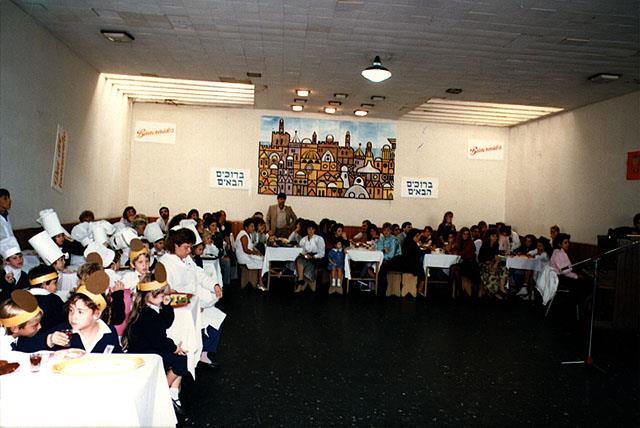
סדר פסח בבית הספר העברי, מונטווידאו, אורוגוואי, 1989

קהילת יהודי מונטווידיאו

מונטווידיאו

בירת אורוגוואי.

הקהילה היהודית במונטווידיאו נוסדה לפני מלחמת-העולם הראשונה בידי מהגרים ממזרח- אירופה ומארצות המזרח התיכון.

בתחילה עסקו היהודים במסחר זעיר, ברוכלות ובמלאכה. עם הזמן השתייכו כיום נמנים יהודי למעמד הבינוני, תפשו מקום נכבד בתעשיה, במסחר ובמקצועות החופשיים. מיעוט קטן המשיכו להתפרנס מעבודת-כפיים.

הוועד היהודי המרכזי מאגד בתוכו את ארבע העדות על ארגוניהן - העדה הכללית (אשכנזית), העדה הספרדית, עדת יוצאי מזרח-אירופה ומרכזה והעדה של יוצאי הונגריה. בהסתדרות הציונית של אורוגוואי מיוצגות כל המפלגות הציוניות.

יהודי מונטווידיאו היו חשופים לתעמולה אנטישמית בשנות השלושים, בתקופת עליית הנאציזם באירופה, ושוב בשנות הששים למאה העשרים, בתקופה של תסיסה מקומית, אך לא סבלו מפעולות המחתרת השמאלנית "טופאמארו".

ב-1976 התרכזו בעיר 48,000 יהודים שהם %96 מכלל הקיבוץ היהודי במדינה, מתוך אוכלוסיה של קרוב ל-3 מיליון (אומדן 1972). עם הזמן עלו רבים לישראל (או היגרו לארצות אחרות), ובשנת 1997 נמנו 30,000 יהודים באורוגוולאי רובם ככולם ישבו במונטווידיאו.

Haim David Zukerwar (1956-2009), rabbi, composer, and kabbalist, born in Montevideo, Uruguay. As a youngster he dedicated himself to the parallel study of music and the Kabbalah. He later studied at the Hebrew University of Jerusalem and at various yeshivas. He immigrated to Israel in 1989 settling in Jerusalem. He continued his career as a composer as well as a lecturer on Kabbalah at the Hebrew University and Bar-Ilan University in Ramat Gan, Israel. His musical compositions include The Canticle of the Prophet – a concerto for violin and orchestra, The Triumph of Jerusalem - variations for piano and orchestra, The Ten Canticles of King David, and the opera Iosef and his brothers. His books include La esencia, el infinito y el alma (2006), Kabala: la esencia de la percepción judía de la realidad (2006), and Torá: El lenguaje de la conciencia (2010). 


סרוסי, ראובן (נ. 1959). מלחין, גיטריסט. נולד במונטווידיאו, אורוגוואי, ועלה לישראל ב-1974.

סרוסי סיים בהצטיינות את לימודיו באקדמיה למוסיקה ע"ש רובין שבאוניברסיטת תל-אביב בהדרכתו של ליאון שידלובסקי בקומפוזיציה. זכה בשני פרסי אקוים ב-1992, בפרס שלישי בתחרות ליצירה תזמורתית מטעם התזמורת הפילהרמונית הישראלית ב-1993, בפרס ראש הממשלה ב-1995, וספרם מפעל חיים מטעם אקו"ם בשנת 2012. יצירותיו בוצעו על ידי מיטב התזמורות והאנסמבלים בארץ ובחו"ל. בשנת 1992 ייצג את ישראל בימי המוסיקה הבינלאומיים מטעם החברה הבינלאומית למוסיקה בת ומננו (ISCM) בווארשה. הוא פעיל גם כנגן גיטרה קלאסית ומרבה להופיע ולהקליט באר ובחו"ל.

Isaac Ben Solomon Algazi (1882-1964), cantor and composer, born in Izmir (Smyrna), Turkey (then part of the Ottoman Empire). As a child he sung in a maftirim choir under the guidance of his father, a cantor and paytan. He then served as a teacher at the Talmud Torah and later became a cantor in Izmir. Beyond his interest in Jewish music, Algazi became an expert in traditional Turkish music. He organized special music courses and his pupils included notable musicians such as Alberto Hemsi.

Algazi's expertise in classical Turkish music led him to adapt and translate some of the pieces into Hebrew texts. In 1923, he was appointed as a cantor and music instructor at the Italian synagogue in the district of Galata, Istanbul. Later, in 1930, he became associated with the Jewish Ladino newspaper La voz de Oriente. Seeking new opportunities, Algazi moved to Paris in 1933 before finally settling in Montevideo, Uruguay. There, he actively participated in Sephardi congregation activities, leaving a significant impact on the community.

As a composer and adapter, he incorporated Turkish influences into synagogue songs, infusing them with a unique flavor. Although much of his work was transmitted orally, a few of his compositions and arrangements were recorded. His works that have survived in oral tradition are The Song of Deborah, Ha-Ben Yakkir Li Efrayim, Kiddush, Selihot, and songs from the Ladino folklore. Algazi also published Extrait du Fassil Husseini des chants juifs orientaux… adapté sous le contrôle de M. Isaac Algazi (1924-1925), a book in in which he connected five piyyutim to form a Turkish fassil (“suite”), each piece following a different uzul (“rhythmic pattern"). His other works include El judaismo, religion de amor (1945) and La Sabiduría Hebrea (1949).

סדר פסח בבית הספר העברי,
מונטווידאו, אורוגוואי, 1989
(המרכז לתיעוד חזותי ע"ש אוסטר, בית התפוצות,
באדיבות אברהם לייבוביץ, אורוגוואי)
חברי תנועת הנוער של מכבי במונטווידאו,
אורוגוואי, שנות ה-1980
צילום: אריאל ירוזולימסקי, ישראל
(המרכז לתיעוד חזותי ע"ש אוסטר, בית התפוצות,
באדיבות אריאל ירוזולימסקי, ישראל)
ביתה של משפחה אורתודוכסית בערב סוכות.
מונטווידאו, אורוגוואי, שנות ה-1980
צילום: אריאל ירוזולימסקי, ישראל
(המרכז לתיעוד חזותי ע"ש אוסטר, בית התפוצות,
באדיבות אריאל ירוזולימסקי, ישראל)
בית הקהילה של יהודי ספרד בעיר העתיקה
של מונטווידאו, אורוגוואי, שנות ה-1980
זהו אזור המיושב ברובו ביהודים יוצאי תורכיה, סוריה, ספרד וקובה
צילום: אריאל ירוזולימסקי, ירושלים
(המרכז לתיעוד חזותי ע"ש אוסטר, בית התפוצות,
באדיבות אריאל ירוזולימסקי, ירושלים)

Noe Jitrik (b. 1928), literary critic born in Buenos Aires, Argentina. He has written several novels, literary and historical critical essays, and poetry. From 1960 to 1966 he was professor of literature at the University of Argentina in Cordoba. In 1987 he became an Honorary Professor at the University of the Republic of Uruguay, and began working as a principal investigator for the "Council for Scientific and Technological Research", CONICET. In 1997 he was appointed director of the Instituto de literatura hispanoamericana at the University of Buenos Aires and contributed to a number of cultural and literary magazines on literary theory. Jitrik won the Artistic Merit Award, awarded by the National Endowment for the Arts. Included in the works for which he was given the award are "History and Literary Imagination", "Stop all certainty", "The Example of the Family", and "Literally dizzy". In 1999 he began to write "Critical History of the Argentian Literature".

Gregorio Klimovsky (1922-2009), mathematician and philosopher, born in Buenos Aires, Argentina, brother of filmmaker Leon Klimovbky. He studied mathematics at the University of Buenos Aires and went on teach at the university - ultimately becoming dean of the Faculty of Humanities. Both as a student and as a teacher at the university, he was a member of the reform movement. He was dismissed from his position in 1976, when the military regime came to power.

His mathematical research led him to take an interest in methodology in scientific research and also ethics, logic and the philosophy of science. He was appointed professor of philosophy, knowledge and ethics at the University of Mexico and also the University of the Republic of Uruguay. In 1986 he was awarded the Konex award for Logic and Philosophy of Science and in 1996 he received the Konex Award for his contribution to the study of the Humanities. He was a member of the Permanent Commission on Human Rights and in 1984 he was appointed a member of the National Commission on Disappeared Persons (CONADEP).

A man of a wide range of interests, at the time of his death Klomovsky had a personal library containing 8,000 volumes.

Manuel Sadosky (1914-2005), mathematician, born in Buenos Aires, Argentina, to parents who had fled from Russia on account of the pogroms. His father was a shoemaker. In 1940 Sadosky graduated from the University of Buenos Aires as a doctor of physics and mathematics. After World War II he received a grant from the French government to continue his studies in Paris, France. In 1955 he became a lecturer at the University of Buenos Aires.
In 1960 he was commissioned to develop the Computational Institute of the university, the first Argentine computer for research and education. He directed the institute until a coup d'état installed the military dictatorship in 1966, when he resigned in opposition to government intervention in the running of the universities. In consequence he moved to Uruguay finding employment at the University of Montevideo where he helped to start a computer studies programme. He returned to Argentina after democratic rule was reestablished but was to flee once again when his life was threatened by a death squad of the anti-communist alliance. He went to Uruguay and Venezuela. He finally went back to Buenos Aires in 1983 when the president appointed him to be Secretary of State for Science and Technology.

מאגרי המידע של אנו
גנאלוגיה יהודית
שמות משפחה
קהילות יהודיות
תיעוד חזותי
מרכז המוזיקה היהודית
מקום
אA
אA
אA
קהילת יהודי מונטווידיאו
מונטווידיאו

בירת אורוגוואי.

הקהילה היהודית במונטווידיאו נוסדה לפני מלחמת-העולם הראשונה בידי מהגרים ממזרח- אירופה ומארצות המזרח התיכון.

בתחילה עסקו היהודים במסחר זעיר, ברוכלות ובמלאכה. עם הזמן השתייכו כיום נמנים יהודי למעמד הבינוני, תפשו מקום נכבד בתעשיה, במסחר ובמקצועות החופשיים. מיעוט קטן המשיכו להתפרנס מעבודת-כפיים.

הוועד היהודי המרכזי מאגד בתוכו את ארבע העדות על ארגוניהן - העדה הכללית (אשכנזית), העדה הספרדית, עדת יוצאי מזרח-אירופה ומרכזה והעדה של יוצאי הונגריה. בהסתדרות הציונית של אורוגוואי מיוצגות כל המפלגות הציוניות.

יהודי מונטווידיאו היו חשופים לתעמולה אנטישמית בשנות השלושים, בתקופת עליית הנאציזם באירופה, ושוב בשנות הששים למאה העשרים, בתקופה של תסיסה מקומית, אך לא סבלו מפעולות המחתרת השמאלנית "טופאמארו".

ב-1976 התרכזו בעיר 48,000 יהודים שהם %96 מכלל הקיבוץ היהודי במדינה, מתוך אוכלוסיה של קרוב ל-3 מיליון (אומדן 1972). עם הזמן עלו רבים לישראל (או היגרו לארצות אחרות), ובשנת 1997 נמנו 30,000 יהודים באורוגוולאי רובם ככולם ישבו במונטווידיאו.
חובר ע"י חוקרים של אנו מוזיאון העם היהודי
חיים דוד צוקרוואר

Haim David Zukerwar (1956-2009), rabbi, composer, and kabbalist, born in Montevideo, Uruguay. As a youngster he dedicated himself to the parallel study of music and the Kabbalah. He later studied at the Hebrew University of Jerusalem and at various yeshivas. He immigrated to Israel in 1989 settling in Jerusalem. He continued his career as a composer as well as a lecturer on Kabbalah at the Hebrew University and Bar-Ilan University in Ramat Gan, Israel. His musical compositions include The Canticle of the Prophet – a concerto for violin and orchestra, The Triumph of Jerusalem - variations for piano and orchestra, The Ten Canticles of King David, and the opera Iosef and his brothers. His books include La esencia, el infinito y el alma (2006), Kabala: la esencia de la percepción judía de la realidad (2006), and Torá: El lenguaje de la conciencia (2010). 


ראובן סרוסי

סרוסי, ראובן (נ. 1959). מלחין, גיטריסט. נולד במונטווידיאו, אורוגוואי, ועלה לישראל ב-1974.

סרוסי סיים בהצטיינות את לימודיו באקדמיה למוסיקה ע"ש רובין שבאוניברסיטת תל-אביב בהדרכתו של ליאון שידלובסקי בקומפוזיציה. זכה בשני פרסי אקוים ב-1992, בפרס שלישי בתחרות ליצירה תזמורתית מטעם התזמורת הפילהרמונית הישראלית ב-1993, בפרס ראש הממשלה ב-1995, וספרם מפעל חיים מטעם אקו"ם בשנת 2012. יצירותיו בוצעו על ידי מיטב התזמורות והאנסמבלים בארץ ובחו"ל. בשנת 1992 ייצג את ישראל בימי המוסיקה הבינלאומיים מטעם החברה הבינלאומית למוסיקה בת ומננו (ISCM) בווארשה. הוא פעיל גם כנגן גיטרה קלאסית ומרבה להופיע ולהקליט באר ובחו"ל.

יצחק אלגזי

Isaac Ben Solomon Algazi (1882-1964), cantor and composer, born in Izmir (Smyrna), Turkey (then part of the Ottoman Empire). As a child he sung in a maftirim choir under the guidance of his father, a cantor and paytan. He then served as a teacher at the Talmud Torah and later became a cantor in Izmir. Beyond his interest in Jewish music, Algazi became an expert in traditional Turkish music. He organized special music courses and his pupils included notable musicians such as Alberto Hemsi.

Algazi's expertise in classical Turkish music led him to adapt and translate some of the pieces into Hebrew texts. In 1923, he was appointed as a cantor and music instructor at the Italian synagogue in the district of Galata, Istanbul. Later, in 1930, he became associated with the Jewish Ladino newspaper La voz de Oriente. Seeking new opportunities, Algazi moved to Paris in 1933 before finally settling in Montevideo, Uruguay. There, he actively participated in Sephardi congregation activities, leaving a significant impact on the community.

As a composer and adapter, he incorporated Turkish influences into synagogue songs, infusing them with a unique flavor. Although much of his work was transmitted orally, a few of his compositions and arrangements were recorded. His works that have survived in oral tradition are The Song of Deborah, Ha-Ben Yakkir Li Efrayim, Kiddush, Selihot, and songs from the Ladino folklore. Algazi also published Extrait du Fassil Husseini des chants juifs orientaux… adapté sous le contrôle de M. Isaac Algazi (1924-1925), a book in in which he connected five piyyutim to form a Turkish fassil (“suite”), each piece following a different uzul (“rhythmic pattern"). His other works include El judaismo, religion de amor (1945) and La Sabiduría Hebrea (1949).

סדר פסח בבית הספר העברי, מונטווידאו, אורוגוואי, 1989
סדר פסח בבית הספר העברי,
מונטווידאו, אורוגוואי, 1989
(המרכז לתיעוד חזותי ע"ש אוסטר, בית התפוצות,
באדיבות אברהם לייבוביץ, אורוגוואי)
חברי תנועת הנוער של מכבי במונטווידאו, אורוגוואי, שנות ה-1980
חברי תנועת הנוער של מכבי במונטווידאו,
אורוגוואי, שנות ה-1980
צילום: אריאל ירוזולימסקי, ישראל
(המרכז לתיעוד חזותי ע"ש אוסטר, בית התפוצות,
באדיבות אריאל ירוזולימסקי, ישראל)
ביתה של משפחה אורתודוכסית בערב סוכות, מונטווידאו, אורוגוואי, שנות ה-1980
ביתה של משפחה אורתודוכסית בערב סוכות.
מונטווידאו, אורוגוואי, שנות ה-1980
צילום: אריאל ירוזולימסקי, ישראל
(המרכז לתיעוד חזותי ע"ש אוסטר, בית התפוצות,
באדיבות אריאל ירוזולימסקי, ישראל)
המרכז הקהילתי של יהודי ספרד, מונטווידאו, אורוגוואי, שנות ה-1980
בית הקהילה של יהודי ספרד בעיר העתיקה
של מונטווידאו, אורוגוואי, שנות ה-1980
זהו אזור המיושב ברובו ביהודים יוצאי תורכיה, סוריה, ספרד וקובה
צילום: אריאל ירוזולימסקי, ירושלים
(המרכז לתיעוד חזותי ע"ש אוסטר, בית התפוצות,
באדיבות אריאל ירוזולימסקי, ירושלים)
נח חיטריק

Noe Jitrik (b. 1928), literary critic born in Buenos Aires, Argentina. He has written several novels, literary and historical critical essays, and poetry. From 1960 to 1966 he was professor of literature at the University of Argentina in Cordoba. In 1987 he became an Honorary Professor at the University of the Republic of Uruguay, and began working as a principal investigator for the "Council for Scientific and Technological Research", CONICET. In 1997 he was appointed director of the Instituto de literatura hispanoamericana at the University of Buenos Aires and contributed to a number of cultural and literary magazines on literary theory. Jitrik won the Artistic Merit Award, awarded by the National Endowment for the Arts. Included in the works for which he was given the award are "History and Literary Imagination", "Stop all certainty", "The Example of the Family", and "Literally dizzy". In 1999 he began to write "Critical History of the Argentian Literature".

גרגוריו לימובסקי

Gregorio Klimovsky (1922-2009), mathematician and philosopher, born in Buenos Aires, Argentina, brother of filmmaker Leon Klimovbky. He studied mathematics at the University of Buenos Aires and went on teach at the university - ultimately becoming dean of the Faculty of Humanities. Both as a student and as a teacher at the university, he was a member of the reform movement. He was dismissed from his position in 1976, when the military regime came to power.

His mathematical research led him to take an interest in methodology in scientific research and also ethics, logic and the philosophy of science. He was appointed professor of philosophy, knowledge and ethics at the University of Mexico and also the University of the Republic of Uruguay. In 1986 he was awarded the Konex award for Logic and Philosophy of Science and in 1996 he received the Konex Award for his contribution to the study of the Humanities. He was a member of the Permanent Commission on Human Rights and in 1984 he was appointed a member of the National Commission on Disappeared Persons (CONADEP).

A man of a wide range of interests, at the time of his death Klomovsky had a personal library containing 8,000 volumes.

מנואל סדוסקי

Manuel Sadosky (1914-2005), mathematician, born in Buenos Aires, Argentina, to parents who had fled from Russia on account of the pogroms. His father was a shoemaker. In 1940 Sadosky graduated from the University of Buenos Aires as a doctor of physics and mathematics. After World War II he received a grant from the French government to continue his studies in Paris, France. In 1955 he became a lecturer at the University of Buenos Aires.
In 1960 he was commissioned to develop the Computational Institute of the university, the first Argentine computer for research and education. He directed the institute until a coup d'état installed the military dictatorship in 1966, when he resigned in opposition to government intervention in the running of the universities. In consequence he moved to Uruguay finding employment at the University of Montevideo where he helped to start a computer studies programme. He returned to Argentina after democratic rule was reestablished but was to flee once again when his life was threatened by a death squad of the anti-communist alliance. He went to Uruguay and Venezuela. He finally went back to Buenos Aires in 1983 when the president appointed him to be Secretary of State for Science and Technology.