Skip to website content >
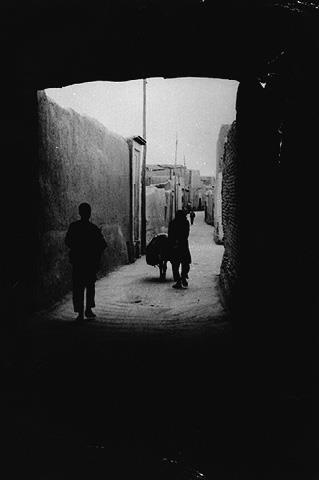
The Jewish Quarter in Isfahan, Iran, 1957

The Jewish Community of Isfahan

Isfahan

Esfahan,  in Persian: اصفهان‎
 

A city in Iran on the route from Teheran to the Persian gulf.

During the 2010s the Jewish population of Isfahan was estimated at about 1,500.

HISTORY

The origin of the Jewish settlement in Isfahan, one of the oldest in Persia, has been ascribed by Pehlevi, Armenian, and Muslim sources to various early historical periods. Though not mentioned in the Talmud, the city's Jewish community is first recorded in the time of the Sassanid ruler Firuz (472 C.E.) who, according to Chamza al-Isfahani, put to death half the Jewish population in Isfahan on a charge of killing two Magian priests. When the Arabs conquered Persia (641), they found a strong Jewish community in Isfahan. The Arab chronicler Abu Nuaym reported that at that time the Jews were celebrating, dancing, and playing music in expectation of a "Jewish king". Under the caliphate, the Jewish quarter in Isfahan, known as Jayy, had grown to such a degree in number and size that Arab and Persian geographers called it Al- Yahudiyya, "the city of the Jews."

Isfahan was the birthplace of the first Jewish sectarian movement, led by Abu Isa of Isfahan, in the time of the Umayyad caliph, Abd al-Malik (685--705). Abu Isa, claiming to be a messiah and a religious reformer, gained a considerable following among the Jews of Isfahan and other places and it is reported that his followers, known as "Isavis" or "Isfahanis", still existed in Isfahan in the tenth century.

Maimonides mentioned the Jews in Isfahan in his Iggeret teiman (Epistle to Yemen); the city was regarded as a center of Hebrew grammar and exegesis. Benjamin of Tudela estimates their number about 1166 at 15,000 and also mentions the chief rabbi Sar Shalom, who had been appointed by the exilarch of Baghdad, with authority over all the communities of Persia. When the Safavid dynasty made Isfahan its capital (1598), the Jews prospered economically and were engaged as craftsmen, artisans, and merchants in drugs, spices, antiquities, jewelry, and textiles. They suffered greatly when the persecution and forced conversion, initiated under Shah Abbas I and renewed under Shah Abbas II, swept throughout the Jewish communities of Persia in the 17th century. Their sufferings were described in the Judeo- Persian chronicles of Babay ibn Lutf and Babay ibn Farchad, and by Carmelite, Jesuit, and other eye witnesses.

Religious life in Isfahan had a rigid traditional rabbinical basis, with the Sabbath and dietary laws strictly enforced. There existed several synagogues, schools, and other communal institutions, and the community was well organized. A Karaite group also existed there. On the instructions of Nadir Shah (d. 1747), the Isfahani Jew Baba ibn Nuriel translated the Psalms and the Pentateuch into Persian in 1740. Bible manuscripts in Judeo-Persian were found in Isfahan at the beginning of the 17th century by the Italian scholar and traveler G. Vechietti, who cooperated with Jewish scholars there in the transliteration of Judeo-Persian manuscripts.

With the advent of the Qajar dynasty (1794--1925) and the transfer of the capital to Teheran, Isfahan and its Jewish population lost much of its cultural and political prominence. European travelers of the 19th century, such as David d'Beth Hillel (1828), Benjamin II (1850), and E. Neumark (1889), estimated the number of Jews in Isfahan at between 300 and 400 families. Jewish cultural life in Isfahan was threatened by the activities of the Bahai movement and the Christian missionary societies, who, exploiting the plight of the Jews, began to work in the Jewish ghettos and established a missionary school in Isfahan in 1889. These inroads were counteracted in 1901 by the establishment of a Jewish school in Isfahan by the Alliance Israelite Universelle. The Jewish population of Isfahan was estimated at about 6,000 at the beginning of the 20th century.

Isfahan is the seat of some revered "holy places", especially the alleged tomb of Serah bat Asher b. Jacob - granddaughter of Jacob (Genesis 46:17; Targum Yerushalmi on Genesis 49:21, on Numbers 27:46), and as such is revered by Jews all over Persia. a popular place of pilgrimage for all Persian Jews, with an inscription dated 1133 C.E.

After the Islamic Revolution of 1979, many of the local Jews left Iran. Those who stayed in place consider themselves Iranian Jews and feel protected by a fatwa – an Islamic religious decree – issued by Ayatollah Ruhollah Khomeini, the first leader of the Islamic Republic of Iran, according to which Iranian Jews were different to those in Israel and should be considered an integral part of the Islamic Republic.

Based on a census of the Jewish Central Organization (Anjoman-e kalimiān) of Teheran, in 2003 there were 1,500 Jews living in Isfahan. About 700 resided in the Jewish neighborhood (maḥalla) in Jubāra quarter and the rest were living around the main thoroughfare of Čahārbāḡ.  Most Jews in Isfahan are business people. Since many Jewish-owned shops are located in a commercial center in central Isfahan, the place is known colloquially as the "Jewish Passage". The community maintains thirteen synagogues. The Jewish school, called Madrasa-ye Etteḥād (formerly Alliance) and run by a Muslim principal, was divided into two separate sections, one for boys and one for girls. Occasionally, the religious education of the young is also provided by the leaders of the community.  

SHEKALIM, SHEQALIM

This Jewish family name derives from a nickname given to one of the family ancestors following a specific event in his life. The family ancestor, Rabbi Eliahu Shekalim from Isfahan, Iran, was responsible for collecting the Zionist shqalim from the Jews of Isfahan. The number of shqalim collected in each community determined the number of delegates sent by the community to the Zionist Congress.

This surname is also documented with Peretz Shekalim, a well known Israeli merchant of carpets, and his daughter Esther Shekalim (Kanka), a poetess and researcher of Jewish communities.

Aziz Golbari was born in Isfahan, Iran, in 1938. Aziz describes the family business. Aziz immigrated to Israel in 1958 after meeting a representative of the Aliyah who told them about the Land of Israel. Before that, although Aziz did not go to school, he was educated in the Halutz movement, where he learned about the Land of Israel and learned to speak Hebrew. Aziz spent most of his childhood working in order to help his parents earn a living. Aziz describes the religious life that existed in Isfahan, the preparation of the hamim. After the meeting with the Jewish emissary, it took Aziz 10 days to pack his belongings, forge documents and immigrate to Israel. He got engaged to his cousin and immigrated to Israel.

-------------------------

This testimony was produced as part of Seeing the Voices – the Israeli national project for the documentation of the heritage of Jews of Arab lands and Iran. The project was initiated by the Israeli Ministry for Social Equality, in cooperation with The Heritage Wing of the Israeli Ministry of Education, The Yad Ben Zvi Institute, and The Museum of the Jewish People at Beit Hatfutsot.
The Oster Visual Documentation Center, ANU - Museum of the Jewish People. The film was produced as part of the Seeing the Voices project, 2019

Nissim Shekalim was born in the city of Isfahan, Iran, in 1938 to a family of merchants. His family consisted of 15 people including the parents (13 siblings and the parents). The father was a fortune teller for the surrounding neighbors except the Jews. In addition to this, the father loved to host Muslims as well and would even argue with them on philosophical issues. Nissim studied at a Muslim school in Iran, the experience of being admitted to the school was not easy because he was of an advanced age, his elder brother was not accepted to the educational institution because of this. In addition, Nissim studied in a heder that was inside a grocery store where all Jewish children would come to learn Hebrew. Most days after the school Nissim would run to his father's shop, where he learned how to do business. The family's relations as Jews in a predominantly Muslim neighborhood were quite good, but sometimes the Muslim children bullied them because of their Jewishness. The Jewish community in Isfahan had unique customs during the holidays and festivals - on 9 Av the community members walked around with torn clothes, sticks in their hands and their heads covered with sand. Although life in Iran was quite good, the family always dreamed of immigrating to the Land of Israel. The father took part in Zionist activities and helped Jews to immigrate to Israel. In 1951, after the father felt that his activity had come to an end, he immigrated along with his entire family. The family arrived in Haifa on New Year's Eve.

-------------------------

This testimony was produced as part of Seeing the Voices – the Israeli national project for the documentation of the heritage of Jews of Arab lands and Iran. The project was initiated by the Israeli Ministry for Social Equality, in cooperation with The Heritage Wing of the Israeli Ministry of Education, The Yad Ben Zvi Institute, and The Museum of the Jewish People at Beit Hatfutsot.
The Oster Visual Documentation Center, ANU - Museum of the Jewish People. The film was produced as part of the Seeing the Voices project, 2019

The Jewish Quarter in Isfahan, Iran, 1957
Photo: Stanley Kaplan, Chicago
The Oster Visual Documentation Center, Beit Hatfutsot, courtesy of Stanley Kaplan, Chicago

Jewish copper smith, Isfahan, Iran, 1978
Photo: Judah Segal, USA
(The Oster Visual Documentation Center, Beit Hatfutsot, courtesy of Judah Segal, USA)

Sefer Torah in the synagogue in Isfahan, Iran, 1966
Photo: Ida Cowen, New York
(The Oster Visual Documentation Center, Beit Hatfutsot,
courtesy of Ida Cowen, New York)

Musa (Moshe) Khan Kashi (also known as Kashani)(1856-1939), musician, singer, and teacher, an expert in classical Persian music, born in Kashan, Iran. He was active in Isfahan, Iran, where he served as a musician at the court of Masʿud Mirzā Žell-al-Solṭān, the governor of Isfahan, for twenty years. In recognition of his talent, the governor of Isfahan granted him the honorific title of Khan. Kasi moved to Yazd, Iran, where he served at the court of the local governor, and eventually to Tehran where he was invited to perform at the court of Nāṣer-al-Din Shah Qajar, the Shah of Persia for almost fifty years (1848-1896). His pupils included some of the most famous musicians in early 20th century Iran. Musa Khan Kashi died in Kashan.

Kashan

Farsi: کاشان‎‎

A town on the road from Teheran to Isfahan, Iran.

The Jewish community there, documented from Medieval times, developed into a cultural center for Persian Jewry and produced a galaxy of great scholars, chroniclers, and poets. The famous Sufi poet Sarmad (d. 1661), author of The Persian Ruba'iyyat, originated from Kashan, as did the two Judeo-Persian chroniclers Babay Ibn Lutf and Babay Ibn Farchad, whose Kitab-I Anusi describes the persecution and the suffering of Persian Jews under Abbas I and Abbas II during the 17th century. In the 18th century emissaries from Eretz Israel visited the community and many letters in Hebrew attest the prominent role of the Jews in Kashan. In 1970 about 300 Jewish families lived in the city.

Iran

ایران  - Islamic Republic of Iran

A country in southwestern Asia. Until 1935, Iran was called Persia.

HISTORY

538 BCE  Zarathushtra - Evil and Good

According to most historians, Jewish settlement in Persia began in 538 BCE, following the "Declaration of Cyrus". This declaration, which went out on behalf of Cyrus, King of Persia, allowed the Babylonian exiles to return to the Land of Israel and to build their Temple in Jerusalem. However, many of the Jews of Babylonia (today's Iraq) chose to stay where they were, whereas others wandered to its neighbor, Persia, which had turned into a great empire in the Ancient Middle East. From this nucleus, subsequently arose the Jewish community that was the center of the story of Book of Esther, which took place in Persia back then, apparently between the years 200 - 400 BCE.

In the years between the establishment of the Persian Empire and it's fall at the hand of the Arabs in 642 CE, there were several dynasties that had control. The last one was the Sasanian dynasty. The focus of Sasanian worship was the Zoroastrian religion, according to which the world was in eternal war between contrasts: good and evil, darkness and light, spirit and material. Since the Jews lived in the Persian Empire for many years, many researchers think that the Jewish religion assimilated several of the Persians' principles: the existence of a devil, the presence of angels and evil spirits, the Garden of Eden and Hell, the resurrection of the dead, the coming of Messiah, the war of Gog and Magog, and more. These elements are not found in the Bible, but they penetrated Judaism due to the influence of Zoroastrianism, and they shaped the Jews' religious outlook for generations.

642 The Messiah Hasn't Come

In the year 642 CE, the Islamic faith arrived, spreading around the world, including Persia. In one day, the huge crowds of Persians replaced their prophet Zoroaster with Muhammad, and Ahura Mazda (the god of goodness according to Zoroastrianism) with Allah. Historians disagree whether Islam was forced upon the Persians or whether they freely chose to adopt it. The truth is probably somewhere in between.

The Islamic historian Abu Nu`aym al-Isfahani, who lived in the Persian city of Isfahan, tells the story that when the Islamic conquerors entered the gates of the city, the Jews came singing and dancing, for they hoped the Muslims had news of the Messiah's expected arrival. It quickly became clear to them that the Muslim believers were indeed riding on donkeys, but there was no Messiah riding among them. The Muslims might not have been bringing redemption, but they treated the Jews with surprising decency: In compliance with the "Pact of Umar" that defined Muslim relationships with other religious minorities in the empire, the Jews were defined as a protected group ("dhimi"), and received rights of autonomy, family, and religion, in exchange for payment of a head tax ("jizya").

850  Literally

One of the denominations among the Jews of Iran in the middle of the 9th century were the Karaites. The Karaites believed only in the literal text of the Torah. According to them, the Oral Torah, essentially the Babylonian Talmud, was illegitimate, because it assumed the freedom to explain the word of God, which, to the Karaites, was a crude act of defiance against the absolute sovereignty of the Lord. For example, the command in Deuteronomy that prohibits cooking a kid in its mother's milk is explained by traditional scholars as the prohibition of eating meat and dairy together. The Karaites take it literally, not to cook a kid in its mother's milk. Another example, from Leviticus, is the legal principle of "an eye for an eye", which the Karaites also take literally: someone who removes the eye of a fellow man will have his eye removed. Traditional scholars, as is known, replace the physical punishment with a monetary fine. The central personalities in the Persian Karaites movement were Chivi l-Balkhi, Benjamin Ben Moses Nahawandi, and Daniel Ben Moses al-Qumisi. All of them lived and were active during the second half of the 9th century. These leaders came out against the tyranny and disorder that spread through the rabbinical institutions, and many in the Persian Jewish community were swept up in following them. The Karaite movement did not pass the test of history. The rigidity of communal leaders with regard to anything written in the Torah ended any discussion. From the stream that measured 40% of the Jews in the 9th and 10th centuries, today there is only a handful of less than one percent.

1219 Not Bears, Not Crusaders

During the 13th century, Mongolian forces came out of the heart of Asia and established the largest empire that ever existed since the dawn of human history. This empire stretched from south eastern Asia until Europe, about 22% of the world. The news of Muslim countries falling, one after another, before the feet of the Mongolian leader Genghis Khan also reached Christian Europe. The news planted hope in the hearts of bishops and priests that now would come the redeemer of Christianity and the conqueror of Islam. But it quickly became clear that to Genghis Khan it made no difference if you were holding a copy of the Koran or believed in the New Testament. As someone who saw himself as the holder of God's rod of anger against the sinners of mankind, the Mongolian leader left behind rivers of blood, orphans and widows, and turned blossoming cities into ashen ruins.

The huge and destructive dimensions of the Mongolian invasion in Persia (1219 - 1223) turned it into a genuine holocaust. Historical sources report that the Mongols did not overlook the Jews: complete communities were destroyed, and a population that numbered in the hundreds of thousands before the invasion, according to traveler Benjamin of Tudela, was left with only a few tens of thousands.

The terrible blow of the Mongolian invasion against the Jews was slightly softened following the relative blossoming of Persia during the Mongolian-Ilkhanate period (1227-1335) and the religious tolerance shown to the Jews. Evidence of this is the appointment of a Jewish doctor from the city of Abhar, Sa'ad al-Daula, to the head of the viziers during the time of the rule of Arghun Khan, at the end of the 13th century.

1359 - Wisdom Among The Nations, Believe!

Shāhin-i Shirāzi, who lived in Persia in the 14th century, is considered one of the great Jewish poets of Persia. Shirazi was influenced by a longstanding tradition of Persian epic poetry that delivered fruits such as the well-known Persian epic Shahnameh, which he assimilated into his creation. In doing so, Shirazi joined a long line of Jewish artists who were influenced by the culture of their time and surroundings, among them Maimonides, whose work The Guide for the Perplexed draws from Aristotelian metaphysics, and the author of the Zohar, who assimilates in his writing agnostic and neo-Platonic teachings, and the poets of the Golden Age in Spain, who "converted" Muslim poetic elements. And there are many examples. 

In the epic work of Shirazi, stories of the creation of the world from the Bible are blended with descriptions of the return to Zion during the time of Cyrus the Great (who, according to Shirazi, converted), and, understandably, the story of Esther. All of this is done in rhyming works that extend over 9,000 verses. Among researchers, general agreement prevails that Shirazi's epic is unique in its type and scope in Jewish-Persian literature (which was written in the Persian language using Hebrew characters), and perhaps in all of Jewish literature. Shirazi was a pioneer of the Jewish-Persian tradition of epic poetry. The poet Amrani, born in 1454, continued the path of Shirazi, writing impressive epics based on biblical stories.

1730   Crypto-Muslims

More than 800 years passed since the death of Husayn ibn Ali, the grandson of Muhammad, on the outskirts of Karbala, an event that symbolized the beginning of the conflict between the Shia and the Sunni, that rages until today, and until a redheaded boy named Ismael subdued, in 1499, the Mongolian- Ilkhanate dynasty and turned Shiite Islam into the official religion of Persia. The Safavid-Shiite dynasty that rose to power with the victory of Ismael ruled almost 300 years, and led a fanatical religious climate that had no tolerance for Jews. Two historical documents from the period shed light on the situation of the Jews in Persia. The first document, Ketāb-e anūsī (“The Book of a Forced Convert”) written in verses by Baba'i ben Lotf, describes the difficult persecutions the Jews of Iran suffered from 1613 to 1662. The poet tells of many Jews martyred after being forced to convert to Islam, and others forced to live as crypto-Jews for generations. The second document, also written in verse, written by Babai ben Farhad, describes the persecution of Jews during the years 1729-1730. From the document it emerges that even if Jews were not forced to convert to Islam, they were subject to discriminatory laws. They had to wear identification badges on their lapels, or were prohibited from gathering in public wearing finer clothing. They could not raise their voices when talking to a Muslim. They had to surrender any inheritance, giving it to a family that had converted to Islam. This last law encouraged Jews to convert to Islam and bankrupted the community.

In the two documents, we find that many crypto-Jews later returned to their origins, but the physical and spiritual harm to the community caused damage to the Jews of Persia that was difficult to recover from for many generations.

1860  Our Child

One of the important projects of the Alliance Israelite Universelle was the establishment of a network of modern elementary schools in Jewish communities in Islamic countries, including Persia. This network of Alliance schools, which advocated for combining the values of the enlightenment with Jewish learning, supported more than anything the introduction of modern values into Persia, especially in the cities of Tehran, Isfahan, Hamedan, and Shiraz.

1917 "If You Want"

The Balfour Declaration, which was issued in 1917, awakened strong nationalistic emotions among the Jews of Persia, exactly as it did to other Jewish communities around the world. These emotions spurred many members of the community to make aliyah to the Land of Israel, specifically to Safed. Two years after the declaration, the Zionist Agency of Persia was founded, which was composed of the religious leaders of Tehran. The Agency published a weekly bulletin called Hageulah ("The Redemption"), which was written in the Persian-Hebrew language, and served to strengthen the study of the Hebrew language as well as closer ties to the large Zionist centers in Eastern Europe. These activities led to a relatively large increase in the number of Persian Jews making aliyah to Israel. Prior to 1925, about 7,000 of the 80,000 Jews in Persia made aliyah to Israel.

One of the important achievements of the Agency was the closer ties between Jewish communities in Persia itself. Before the establishment of the Agency, the Jews in Persia lived primarily in the cities of the frontier, far away and cut off from each other. The Agency's center in Tehran joined together these isolated communities, whose members were mostly poor and impoverished, putting them under a common roof  and harnessing them to Zionist activities with broad scope.

1925 Don't Look at the Container

A model nation-state merited much success during the period between the two World Wars. Young nations rose up routinely, and united around a strong army, a modern economy, and a secular way of life. Even land with a dominant religious character, like Turkey and Iran, shed their ethical finery and adopted a clearly secular way of life.

The person who stood in the center of this national  revolution in Persia was an officer who rose to the throne in December, 1925, thanks to his abilities, his political maneuvering, and to the situation at that time, including support from the British. His name was Razah Shah (1878-1944), and he was the first secular leader of Persia, during whose reign the name of the country was changed to Iran. Razah Shah conducted all-out wars against the religious establishment in Iran, and implemented far-reaching reforms that hastened the processes of secularization and modernization in Iranian society.

The Jews reacted positively to the reforms of Razah Shah. They demonstrated a desire to join the current of Iranian nationalism. They loved Persian poetry and literature. They celebrated the national Iranian holidays and changed their names to Persian names, and boasted about the pre-Islamic days of Iran. Following the cancellation of regulations, they were allowed to serve in the army and to study in government elementary schools. The most significant change was the permission they received to leave the ghetto. This permission made it possible for many Jews to establish stores in central business areas and improve their economic situation.

However, there are those who will say that the improvement in the situation of the Jews was only superficial. In contrast to the other minorities in Iran, like the Armenians or members of the Zoroastrian religion, who were closer to the Iranians based on language, culture, ethnicity and history, the Jews preserved their relationship to their foreign origins. This fact awakened tensions between them and the general Iranian community. These tensions came to be expressed most clearly during World War II, when Razah Shah refused to join the Allies.

1941  Children of Tehran

The invasion of the Nazi army into the Soviet Union, and it's advance toward the northern border of Iran, ignited the excitement of Fascist groups and mobs in Iran, who were thirsty to get their hands on Jewish property. Further reinforcement of the pro-Nazi atmosphere came from the political domain: the shaky relationship between Iran and Russia and Britain brought Razah Shah to choose the Nazis as the masters of the political treaty. Business relationships between Iran and Germany were continuing to get closer, and many technicians and engineers were flowing to Iran from Germany. These changes in Iranian society, besides the belief in the common Aryan origins of both the Persian and German people, accompanied by an anti-Semitic campaign in newspapers and on the radio, burned the ground under the feet of Jews in Iran.

With great luck, in the fall of 1941, Allied forces entered Iran and turned history on a more optimistic path. The period of occupation by the Allied (1941-1946) is considered one of the most dynamic in the history of Iran. More than 20 political parties were founded, from all ends of the political rainbow. Tens of free newspapers and weeklies were published in Tehran and in the provinces. Zionist activity was revived in full strength, and even the Jewish Agency opened an office in Tehran. The activity of the agency focused on saving "the children of Tehran", Jewish orphans who had been smuggled from occupied Poland toward the end of World War II and wandered the streets of the Soviet Union, together with the army of the Polish General Andreas, until they reached Tehran. From there, they were brought, with the help of the Agency, directly to Israel. Among the children of Tehran is the known television personality and member of the World Olympic Committee, Alex Gilady, the General Avigdor Ben-Gal, and the learned scholar from Biala, Rabbi Ben Zion Rabinowitz.

1961 By Their Lives and By Their Deaths

In 1941, the control of Iran passed from Razah Shah to his son, Mohammed Razah Shah Pahlavi (1919-1980), who ruled the country until the Islamic Revolution of 1979, and who, in 1961, compared the relations between Israel and Iran to "the relations between lovers except for marriage". Today, with the difficult relationships between the two countries, the statement seems quite imaginary.

But in reality, until the "Ayatollah revolution", Israel and Iran maintained close and warm relationships. The young State of Israel had an embassy in Tehran and maintained a variety of business, political and cultural relationships with secular Iran.

From 1951 to 1954, approximately 70,000 Jews made aliyah from Iran to Israel, most of them urban dwellers of lower status. They established tens of settlements throughout Israel. Not only that, but the Jews who remained in Iran after the establishment of the State of Israel enjoyed the politics of the Shah. The "White Revolution" that he led in 1963, with the purpose of turning Iran into a strong, regional economic power, benefited the Jews in all areas. In the course of one generation, they attained impressive achievements. Despite their small proportion of the population (until 1979 there were about 80,000 Jews in Iran, less than a quarter of a percent of the general population), their economic, professional, and cultural influence was powerful. Approximately 10% of the Jews in Iran were extremely wealthy, and the rest were based in the middle class. The proportion of academics or physicians was much higher than the proportion among the general population. Despite the incitement of Muslim extremists that essentially increased after the Six Day War, the Iranian police treated them with great sympathy.

2000   Left, Right, Left

In 1979, the Iranian Revolution erupted. The background for the eruption was an absurd agreement between Muslim religious figures, who opposed the secular government's secular and social reforms, and an extreme left-wing group with communist tendencies, who called for a rebellion against "wicked American imperialism", and who saw Razah Shah as a representative.

The religious extremists, with their exiled leader of the revolution, Ayatollah Khomeini (1902 - 1989), came out on top: Iran turned into a country run according to Muslim-Shiite law, and the religious institution ruled with coercion. In a complete contrast to Shah, the Ayatollah Khomeini and his government defined the State of Israel as an enemy of humanity, and Zionism as an abomination. Nevertheless, despite occasional expressions of anti-Semitism, the Iranian government was careful to separate their relationships with the State of Israel from their relationships with the Jews living in Iran. The efforts of the latter group to declare their loyalty to the government and to express criticism of the Zionist project also contributed to this separation. Even so, beginning in 1979 and until 1987, fifty thousand Jews left Iran. Approximately 25 thousand of them went to the west coast of the United States, and 20 thousand of them went to Israel.

As of early 21st century, the relationship between Iran and the State of Israel is a largely hostile one. Iran's leaders constantly use violent rhetoric with regard to Israel. The relationship between the countries has been aggravated following Iran's efforts to develop nuclear weapons, efforts that have caused the Israeli governments to engage in a broad diplomatic war against them.

At the beginning of the new millennium, there were 8,750 Jews living in Iran.

Yezd

Yazd; in Farsi: یزد‬‎

City in central Iran, probably built by Yazdegerd I (399-420).

That Yezd was a center of Jewish scholars in the early middle ages is attested by a 9th century Hebrew manuscript of the later prophets with Masoretic notes which was found there; it is one of the oldest known biblical manuscripts composed by Persian Jews.

The Yezd community's spiritual leader, Mulla Or Shraga, who is mentioned in many Hebrew letters of the early decades of the 19th century, maintained close contacts with the Jews of Meshed.

At the beginning of the 20th century an Alliance Israelite Universelle school was established in the city.

Jews from Yezd were among the earliest immigrants to Palestine and many families settled, mainly in Safed and Jerusalem. In the late 1960's only a few Jews remained in the city.

ANU Databases
Jewish Genealogy
Family Names
Jewish Communities
Visual Documentation
Jewish Music Center
Place
אA
אA
אA
The Jewish Community of Isfahan

Isfahan

Esfahan,  in Persian: اصفهان‎
 

A city in Iran on the route from Teheran to the Persian gulf.

During the 2010s the Jewish population of Isfahan was estimated at about 1,500.

HISTORY

The origin of the Jewish settlement in Isfahan, one of the oldest in Persia, has been ascribed by Pehlevi, Armenian, and Muslim sources to various early historical periods. Though not mentioned in the Talmud, the city's Jewish community is first recorded in the time of the Sassanid ruler Firuz (472 C.E.) who, according to Chamza al-Isfahani, put to death half the Jewish population in Isfahan on a charge of killing two Magian priests. When the Arabs conquered Persia (641), they found a strong Jewish community in Isfahan. The Arab chronicler Abu Nuaym reported that at that time the Jews were celebrating, dancing, and playing music in expectation of a "Jewish king". Under the caliphate, the Jewish quarter in Isfahan, known as Jayy, had grown to such a degree in number and size that Arab and Persian geographers called it Al- Yahudiyya, "the city of the Jews."

Isfahan was the birthplace of the first Jewish sectarian movement, led by Abu Isa of Isfahan, in the time of the Umayyad caliph, Abd al-Malik (685--705). Abu Isa, claiming to be a messiah and a religious reformer, gained a considerable following among the Jews of Isfahan and other places and it is reported that his followers, known as "Isavis" or "Isfahanis", still existed in Isfahan in the tenth century.

Maimonides mentioned the Jews in Isfahan in his Iggeret teiman (Epistle to Yemen); the city was regarded as a center of Hebrew grammar and exegesis. Benjamin of Tudela estimates their number about 1166 at 15,000 and also mentions the chief rabbi Sar Shalom, who had been appointed by the exilarch of Baghdad, with authority over all the communities of Persia. When the Safavid dynasty made Isfahan its capital (1598), the Jews prospered economically and were engaged as craftsmen, artisans, and merchants in drugs, spices, antiquities, jewelry, and textiles. They suffered greatly when the persecution and forced conversion, initiated under Shah Abbas I and renewed under Shah Abbas II, swept throughout the Jewish communities of Persia in the 17th century. Their sufferings were described in the Judeo- Persian chronicles of Babay ibn Lutf and Babay ibn Farchad, and by Carmelite, Jesuit, and other eye witnesses.

Religious life in Isfahan had a rigid traditional rabbinical basis, with the Sabbath and dietary laws strictly enforced. There existed several synagogues, schools, and other communal institutions, and the community was well organized. A Karaite group also existed there. On the instructions of Nadir Shah (d. 1747), the Isfahani Jew Baba ibn Nuriel translated the Psalms and the Pentateuch into Persian in 1740. Bible manuscripts in Judeo-Persian were found in Isfahan at the beginning of the 17th century by the Italian scholar and traveler G. Vechietti, who cooperated with Jewish scholars there in the transliteration of Judeo-Persian manuscripts.

With the advent of the Qajar dynasty (1794--1925) and the transfer of the capital to Teheran, Isfahan and its Jewish population lost much of its cultural and political prominence. European travelers of the 19th century, such as David d'Beth Hillel (1828), Benjamin II (1850), and E. Neumark (1889), estimated the number of Jews in Isfahan at between 300 and 400 families. Jewish cultural life in Isfahan was threatened by the activities of the Bahai movement and the Christian missionary societies, who, exploiting the plight of the Jews, began to work in the Jewish ghettos and established a missionary school in Isfahan in 1889. These inroads were counteracted in 1901 by the establishment of a Jewish school in Isfahan by the Alliance Israelite Universelle. The Jewish population of Isfahan was estimated at about 6,000 at the beginning of the 20th century.

Isfahan is the seat of some revered "holy places", especially the alleged tomb of Serah bat Asher b. Jacob - granddaughter of Jacob (Genesis 46:17; Targum Yerushalmi on Genesis 49:21, on Numbers 27:46), and as such is revered by Jews all over Persia. a popular place of pilgrimage for all Persian Jews, with an inscription dated 1133 C.E.

After the Islamic Revolution of 1979, many of the local Jews left Iran. Those who stayed in place consider themselves Iranian Jews and feel protected by a fatwa – an Islamic religious decree – issued by Ayatollah Ruhollah Khomeini, the first leader of the Islamic Republic of Iran, according to which Iranian Jews were different to those in Israel and should be considered an integral part of the Islamic Republic.

Based on a census of the Jewish Central Organization (Anjoman-e kalimiān) of Teheran, in 2003 there were 1,500 Jews living in Isfahan. About 700 resided in the Jewish neighborhood (maḥalla) in Jubāra quarter and the rest were living around the main thoroughfare of Čahārbāḡ.  Most Jews in Isfahan are business people. Since many Jewish-owned shops are located in a commercial center in central Isfahan, the place is known colloquially as the "Jewish Passage". The community maintains thirteen synagogues. The Jewish school, called Madrasa-ye Etteḥād (formerly Alliance) and run by a Muslim principal, was divided into two separate sections, one for boys and one for girls. Occasionally, the religious education of the young is also provided by the leaders of the community.  

Written by researchers of ANU Museum of the Jewish People
SHEKALIM, SHEQALIM
SHEKALIM, SHEQALIM

This Jewish family name derives from a nickname given to one of the family ancestors following a specific event in his life. The family ancestor, Rabbi Eliahu Shekalim from Isfahan, Iran, was responsible for collecting the Zionist shqalim from the Jews of Isfahan. The number of shqalim collected in each community determined the number of delegates sent by the community to the Zionist Congress.

This surname is also documented with Peretz Shekalim, a well known Israeli merchant of carpets, and his daughter Esther Shekalim (Kanka), a poetess and researcher of Jewish communities.
Aziz Golbari Recounts His Life in Isfahan, Iran, 2018

Aziz Golbari was born in Isfahan, Iran, in 1938. Aziz describes the family business. Aziz immigrated to Israel in 1958 after meeting a representative of the Aliyah who told them about the Land of Israel. Before that, although Aziz did not go to school, he was educated in the Halutz movement, where he learned about the Land of Israel and learned to speak Hebrew. Aziz spent most of his childhood working in order to help his parents earn a living. Aziz describes the religious life that existed in Isfahan, the preparation of the hamim. After the meeting with the Jewish emissary, it took Aziz 10 days to pack his belongings, forge documents and immigrate to Israel. He got engaged to his cousin and immigrated to Israel.

-------------------------

This testimony was produced as part of Seeing the Voices – the Israeli national project for the documentation of the heritage of Jews of Arab lands and Iran. The project was initiated by the Israeli Ministry for Social Equality, in cooperation with The Heritage Wing of the Israeli Ministry of Education, The Yad Ben Zvi Institute, and The Museum of the Jewish People at Beit Hatfutsot.
The Oster Visual Documentation Center, ANU - Museum of the Jewish People. The film was produced as part of the Seeing the Voices project, 2019

Nissim Shekalim Recounts His Life in Isfahan, Iran, 2018

Nissim Shekalim was born in the city of Isfahan, Iran, in 1938 to a family of merchants. His family consisted of 15 people including the parents (13 siblings and the parents). The father was a fortune teller for the surrounding neighbors except the Jews. In addition to this, the father loved to host Muslims as well and would even argue with them on philosophical issues. Nissim studied at a Muslim school in Iran, the experience of being admitted to the school was not easy because he was of an advanced age, his elder brother was not accepted to the educational institution because of this. In addition, Nissim studied in a heder that was inside a grocery store where all Jewish children would come to learn Hebrew. Most days after the school Nissim would run to his father's shop, where he learned how to do business. The family's relations as Jews in a predominantly Muslim neighborhood were quite good, but sometimes the Muslim children bullied them because of their Jewishness. The Jewish community in Isfahan had unique customs during the holidays and festivals - on 9 Av the community members walked around with torn clothes, sticks in their hands and their heads covered with sand. Although life in Iran was quite good, the family always dreamed of immigrating to the Land of Israel. The father took part in Zionist activities and helped Jews to immigrate to Israel. In 1951, after the father felt that his activity had come to an end, he immigrated along with his entire family. The family arrived in Haifa on New Year's Eve.

-------------------------

This testimony was produced as part of Seeing the Voices – the Israeli national project for the documentation of the heritage of Jews of Arab lands and Iran. The project was initiated by the Israeli Ministry for Social Equality, in cooperation with The Heritage Wing of the Israeli Ministry of Education, The Yad Ben Zvi Institute, and The Museum of the Jewish People at Beit Hatfutsot.
The Oster Visual Documentation Center, ANU - Museum of the Jewish People. The film was produced as part of the Seeing the Voices project, 2019

The Jewish Quarter in Isfahan, Iran, 1957

The Jewish Quarter in Isfahan, Iran, 1957
Photo: Stanley Kaplan, Chicago
The Oster Visual Documentation Center, Beit Hatfutsot, courtesy of Stanley Kaplan, Chicago

A Jewish coppersmith, Isfahan, Iran, 1978

Jewish copper smith, Isfahan, Iran, 1978
Photo: Judah Segal, USA
(The Oster Visual Documentation Center, Beit Hatfutsot, courtesy of Judah Segal, USA)

Sefer Torah in the synagogue in Isfahan, Iran, 1966
Photo: Ida Cowen, New York
(The Oster Visual Documentation Center, Beit Hatfutsot,
courtesy of Ida Cowen, New York)
Musa Khan Kasi

Musa (Moshe) Khan Kashi (also known as Kashani)(1856-1939), musician, singer, and teacher, an expert in classical Persian music, born in Kashan, Iran. He was active in Isfahan, Iran, where he served as a musician at the court of Masʿud Mirzā Žell-al-Solṭān, the governor of Isfahan, for twenty years. In recognition of his talent, the governor of Isfahan granted him the honorific title of Khan. Kasi moved to Yazd, Iran, where he served at the court of the local governor, and eventually to Tehran where he was invited to perform at the court of Nāṣer-al-Din Shah Qajar, the Shah of Persia for almost fifty years (1848-1896). His pupils included some of the most famous musicians in early 20th century Iran. Musa Khan Kashi died in Kashan.

Kashan

Kashan

Farsi: کاشان‎‎

A town on the road from Teheran to Isfahan, Iran.

The Jewish community there, documented from Medieval times, developed into a cultural center for Persian Jewry and produced a galaxy of great scholars, chroniclers, and poets. The famous Sufi poet Sarmad (d. 1661), author of The Persian Ruba'iyyat, originated from Kashan, as did the two Judeo-Persian chroniclers Babay Ibn Lutf and Babay Ibn Farchad, whose Kitab-I Anusi describes the persecution and the suffering of Persian Jews under Abbas I and Abbas II during the 17th century. In the 18th century emissaries from Eretz Israel visited the community and many letters in Hebrew attest the prominent role of the Jews in Kashan. In 1970 about 300 Jewish families lived in the city.

Iran

Iran

ایران  - Islamic Republic of Iran

A country in southwestern Asia. Until 1935, Iran was called Persia.

HISTORY

538 BCE  Zarathushtra - Evil and Good

According to most historians, Jewish settlement in Persia began in 538 BCE, following the "Declaration of Cyrus". This declaration, which went out on behalf of Cyrus, King of Persia, allowed the Babylonian exiles to return to the Land of Israel and to build their Temple in Jerusalem. However, many of the Jews of Babylonia (today's Iraq) chose to stay where they were, whereas others wandered to its neighbor, Persia, which had turned into a great empire in the Ancient Middle East. From this nucleus, subsequently arose the Jewish community that was the center of the story of Book of Esther, which took place in Persia back then, apparently between the years 200 - 400 BCE.

In the years between the establishment of the Persian Empire and it's fall at the hand of the Arabs in 642 CE, there were several dynasties that had control. The last one was the Sasanian dynasty. The focus of Sasanian worship was the Zoroastrian religion, according to which the world was in eternal war between contrasts: good and evil, darkness and light, spirit and material. Since the Jews lived in the Persian Empire for many years, many researchers think that the Jewish religion assimilated several of the Persians' principles: the existence of a devil, the presence of angels and evil spirits, the Garden of Eden and Hell, the resurrection of the dead, the coming of Messiah, the war of Gog and Magog, and more. These elements are not found in the Bible, but they penetrated Judaism due to the influence of Zoroastrianism, and they shaped the Jews' religious outlook for generations.

642 The Messiah Hasn't Come

In the year 642 CE, the Islamic faith arrived, spreading around the world, including Persia. In one day, the huge crowds of Persians replaced their prophet Zoroaster with Muhammad, and Ahura Mazda (the god of goodness according to Zoroastrianism) with Allah. Historians disagree whether Islam was forced upon the Persians or whether they freely chose to adopt it. The truth is probably somewhere in between.

The Islamic historian Abu Nu`aym al-Isfahani, who lived in the Persian city of Isfahan, tells the story that when the Islamic conquerors entered the gates of the city, the Jews came singing and dancing, for they hoped the Muslims had news of the Messiah's expected arrival. It quickly became clear to them that the Muslim believers were indeed riding on donkeys, but there was no Messiah riding among them. The Muslims might not have been bringing redemption, but they treated the Jews with surprising decency: In compliance with the "Pact of Umar" that defined Muslim relationships with other religious minorities in the empire, the Jews were defined as a protected group ("dhimi"), and received rights of autonomy, family, and religion, in exchange for payment of a head tax ("jizya").

850  Literally

One of the denominations among the Jews of Iran in the middle of the 9th century were the Karaites. The Karaites believed only in the literal text of the Torah. According to them, the Oral Torah, essentially the Babylonian Talmud, was illegitimate, because it assumed the freedom to explain the word of God, which, to the Karaites, was a crude act of defiance against the absolute sovereignty of the Lord. For example, the command in Deuteronomy that prohibits cooking a kid in its mother's milk is explained by traditional scholars as the prohibition of eating meat and dairy together. The Karaites take it literally, not to cook a kid in its mother's milk. Another example, from Leviticus, is the legal principle of "an eye for an eye", which the Karaites also take literally: someone who removes the eye of a fellow man will have his eye removed. Traditional scholars, as is known, replace the physical punishment with a monetary fine. The central personalities in the Persian Karaites movement were Chivi l-Balkhi, Benjamin Ben Moses Nahawandi, and Daniel Ben Moses al-Qumisi. All of them lived and were active during the second half of the 9th century. These leaders came out against the tyranny and disorder that spread through the rabbinical institutions, and many in the Persian Jewish community were swept up in following them. The Karaite movement did not pass the test of history. The rigidity of communal leaders with regard to anything written in the Torah ended any discussion. From the stream that measured 40% of the Jews in the 9th and 10th centuries, today there is only a handful of less than one percent.

1219 Not Bears, Not Crusaders

During the 13th century, Mongolian forces came out of the heart of Asia and established the largest empire that ever existed since the dawn of human history. This empire stretched from south eastern Asia until Europe, about 22% of the world. The news of Muslim countries falling, one after another, before the feet of the Mongolian leader Genghis Khan also reached Christian Europe. The news planted hope in the hearts of bishops and priests that now would come the redeemer of Christianity and the conqueror of Islam. But it quickly became clear that to Genghis Khan it made no difference if you were holding a copy of the Koran or believed in the New Testament. As someone who saw himself as the holder of God's rod of anger against the sinners of mankind, the Mongolian leader left behind rivers of blood, orphans and widows, and turned blossoming cities into ashen ruins.

The huge and destructive dimensions of the Mongolian invasion in Persia (1219 - 1223) turned it into a genuine holocaust. Historical sources report that the Mongols did not overlook the Jews: complete communities were destroyed, and a population that numbered in the hundreds of thousands before the invasion, according to traveler Benjamin of Tudela, was left with only a few tens of thousands.

The terrible blow of the Mongolian invasion against the Jews was slightly softened following the relative blossoming of Persia during the Mongolian-Ilkhanate period (1227-1335) and the religious tolerance shown to the Jews. Evidence of this is the appointment of a Jewish doctor from the city of Abhar, Sa'ad al-Daula, to the head of the viziers during the time of the rule of Arghun Khan, at the end of the 13th century.

1359 - Wisdom Among The Nations, Believe!

Shāhin-i Shirāzi, who lived in Persia in the 14th century, is considered one of the great Jewish poets of Persia. Shirazi was influenced by a longstanding tradition of Persian epic poetry that delivered fruits such as the well-known Persian epic Shahnameh, which he assimilated into his creation. In doing so, Shirazi joined a long line of Jewish artists who were influenced by the culture of their time and surroundings, among them Maimonides, whose work The Guide for the Perplexed draws from Aristotelian metaphysics, and the author of the Zohar, who assimilates in his writing agnostic and neo-Platonic teachings, and the poets of the Golden Age in Spain, who "converted" Muslim poetic elements. And there are many examples. 

In the epic work of Shirazi, stories of the creation of the world from the Bible are blended with descriptions of the return to Zion during the time of Cyrus the Great (who, according to Shirazi, converted), and, understandably, the story of Esther. All of this is done in rhyming works that extend over 9,000 verses. Among researchers, general agreement prevails that Shirazi's epic is unique in its type and scope in Jewish-Persian literature (which was written in the Persian language using Hebrew characters), and perhaps in all of Jewish literature. Shirazi was a pioneer of the Jewish-Persian tradition of epic poetry. The poet Amrani, born in 1454, continued the path of Shirazi, writing impressive epics based on biblical stories.

1730   Crypto-Muslims

More than 800 years passed since the death of Husayn ibn Ali, the grandson of Muhammad, on the outskirts of Karbala, an event that symbolized the beginning of the conflict between the Shia and the Sunni, that rages until today, and until a redheaded boy named Ismael subdued, in 1499, the Mongolian- Ilkhanate dynasty and turned Shiite Islam into the official religion of Persia. The Safavid-Shiite dynasty that rose to power with the victory of Ismael ruled almost 300 years, and led a fanatical religious climate that had no tolerance for Jews. Two historical documents from the period shed light on the situation of the Jews in Persia. The first document, Ketāb-e anūsī (“The Book of a Forced Convert”) written in verses by Baba'i ben Lotf, describes the difficult persecutions the Jews of Iran suffered from 1613 to 1662. The poet tells of many Jews martyred after being forced to convert to Islam, and others forced to live as crypto-Jews for generations. The second document, also written in verse, written by Babai ben Farhad, describes the persecution of Jews during the years 1729-1730. From the document it emerges that even if Jews were not forced to convert to Islam, they were subject to discriminatory laws. They had to wear identification badges on their lapels, or were prohibited from gathering in public wearing finer clothing. They could not raise their voices when talking to a Muslim. They had to surrender any inheritance, giving it to a family that had converted to Islam. This last law encouraged Jews to convert to Islam and bankrupted the community.

In the two documents, we find that many crypto-Jews later returned to their origins, but the physical and spiritual harm to the community caused damage to the Jews of Persia that was difficult to recover from for many generations.

1860  Our Child

One of the important projects of the Alliance Israelite Universelle was the establishment of a network of modern elementary schools in Jewish communities in Islamic countries, including Persia. This network of Alliance schools, which advocated for combining the values of the enlightenment with Jewish learning, supported more than anything the introduction of modern values into Persia, especially in the cities of Tehran, Isfahan, Hamedan, and Shiraz.

1917 "If You Want"

The Balfour Declaration, which was issued in 1917, awakened strong nationalistic emotions among the Jews of Persia, exactly as it did to other Jewish communities around the world. These emotions spurred many members of the community to make aliyah to the Land of Israel, specifically to Safed. Two years after the declaration, the Zionist Agency of Persia was founded, which was composed of the religious leaders of Tehran. The Agency published a weekly bulletin called Hageulah ("The Redemption"), which was written in the Persian-Hebrew language, and served to strengthen the study of the Hebrew language as well as closer ties to the large Zionist centers in Eastern Europe. These activities led to a relatively large increase in the number of Persian Jews making aliyah to Israel. Prior to 1925, about 7,000 of the 80,000 Jews in Persia made aliyah to Israel.

One of the important achievements of the Agency was the closer ties between Jewish communities in Persia itself. Before the establishment of the Agency, the Jews in Persia lived primarily in the cities of the frontier, far away and cut off from each other. The Agency's center in Tehran joined together these isolated communities, whose members were mostly poor and impoverished, putting them under a common roof  and harnessing them to Zionist activities with broad scope.

1925 Don't Look at the Container

A model nation-state merited much success during the period between the two World Wars. Young nations rose up routinely, and united around a strong army, a modern economy, and a secular way of life. Even land with a dominant religious character, like Turkey and Iran, shed their ethical finery and adopted a clearly secular way of life.

The person who stood in the center of this national  revolution in Persia was an officer who rose to the throne in December, 1925, thanks to his abilities, his political maneuvering, and to the situation at that time, including support from the British. His name was Razah Shah (1878-1944), and he was the first secular leader of Persia, during whose reign the name of the country was changed to Iran. Razah Shah conducted all-out wars against the religious establishment in Iran, and implemented far-reaching reforms that hastened the processes of secularization and modernization in Iranian society.

The Jews reacted positively to the reforms of Razah Shah. They demonstrated a desire to join the current of Iranian nationalism. They loved Persian poetry and literature. They celebrated the national Iranian holidays and changed their names to Persian names, and boasted about the pre-Islamic days of Iran. Following the cancellation of regulations, they were allowed to serve in the army and to study in government elementary schools. The most significant change was the permission they received to leave the ghetto. This permission made it possible for many Jews to establish stores in central business areas and improve their economic situation.

However, there are those who will say that the improvement in the situation of the Jews was only superficial. In contrast to the other minorities in Iran, like the Armenians or members of the Zoroastrian religion, who were closer to the Iranians based on language, culture, ethnicity and history, the Jews preserved their relationship to their foreign origins. This fact awakened tensions between them and the general Iranian community. These tensions came to be expressed most clearly during World War II, when Razah Shah refused to join the Allies.

1941  Children of Tehran

The invasion of the Nazi army into the Soviet Union, and it's advance toward the northern border of Iran, ignited the excitement of Fascist groups and mobs in Iran, who were thirsty to get their hands on Jewish property. Further reinforcement of the pro-Nazi atmosphere came from the political domain: the shaky relationship between Iran and Russia and Britain brought Razah Shah to choose the Nazis as the masters of the political treaty. Business relationships between Iran and Germany were continuing to get closer, and many technicians and engineers were flowing to Iran from Germany. These changes in Iranian society, besides the belief in the common Aryan origins of both the Persian and German people, accompanied by an anti-Semitic campaign in newspapers and on the radio, burned the ground under the feet of Jews in Iran.

With great luck, in the fall of 1941, Allied forces entered Iran and turned history on a more optimistic path. The period of occupation by the Allied (1941-1946) is considered one of the most dynamic in the history of Iran. More than 20 political parties were founded, from all ends of the political rainbow. Tens of free newspapers and weeklies were published in Tehran and in the provinces. Zionist activity was revived in full strength, and even the Jewish Agency opened an office in Tehran. The activity of the agency focused on saving "the children of Tehran", Jewish orphans who had been smuggled from occupied Poland toward the end of World War II and wandered the streets of the Soviet Union, together with the army of the Polish General Andreas, until they reached Tehran. From there, they were brought, with the help of the Agency, directly to Israel. Among the children of Tehran is the known television personality and member of the World Olympic Committee, Alex Gilady, the General Avigdor Ben-Gal, and the learned scholar from Biala, Rabbi Ben Zion Rabinowitz.

1961 By Their Lives and By Their Deaths

In 1941, the control of Iran passed from Razah Shah to his son, Mohammed Razah Shah Pahlavi (1919-1980), who ruled the country until the Islamic Revolution of 1979, and who, in 1961, compared the relations between Israel and Iran to "the relations between lovers except for marriage". Today, with the difficult relationships between the two countries, the statement seems quite imaginary.

But in reality, until the "Ayatollah revolution", Israel and Iran maintained close and warm relationships. The young State of Israel had an embassy in Tehran and maintained a variety of business, political and cultural relationships with secular Iran.

From 1951 to 1954, approximately 70,000 Jews made aliyah from Iran to Israel, most of them urban dwellers of lower status. They established tens of settlements throughout Israel. Not only that, but the Jews who remained in Iran after the establishment of the State of Israel enjoyed the politics of the Shah. The "White Revolution" that he led in 1963, with the purpose of turning Iran into a strong, regional economic power, benefited the Jews in all areas. In the course of one generation, they attained impressive achievements. Despite their small proportion of the population (until 1979 there were about 80,000 Jews in Iran, less than a quarter of a percent of the general population), their economic, professional, and cultural influence was powerful. Approximately 10% of the Jews in Iran were extremely wealthy, and the rest were based in the middle class. The proportion of academics or physicians was much higher than the proportion among the general population. Despite the incitement of Muslim extremists that essentially increased after the Six Day War, the Iranian police treated them with great sympathy.

2000   Left, Right, Left

In 1979, the Iranian Revolution erupted. The background for the eruption was an absurd agreement between Muslim religious figures, who opposed the secular government's secular and social reforms, and an extreme left-wing group with communist tendencies, who called for a rebellion against "wicked American imperialism", and who saw Razah Shah as a representative.

The religious extremists, with their exiled leader of the revolution, Ayatollah Khomeini (1902 - 1989), came out on top: Iran turned into a country run according to Muslim-Shiite law, and the religious institution ruled with coercion. In a complete contrast to Shah, the Ayatollah Khomeini and his government defined the State of Israel as an enemy of humanity, and Zionism as an abomination. Nevertheless, despite occasional expressions of anti-Semitism, the Iranian government was careful to separate their relationships with the State of Israel from their relationships with the Jews living in Iran. The efforts of the latter group to declare their loyalty to the government and to express criticism of the Zionist project also contributed to this separation. Even so, beginning in 1979 and until 1987, fifty thousand Jews left Iran. Approximately 25 thousand of them went to the west coast of the United States, and 20 thousand of them went to Israel.

As of early 21st century, the relationship between Iran and the State of Israel is a largely hostile one. Iran's leaders constantly use violent rhetoric with regard to Israel. The relationship between the countries has been aggravated following Iran's efforts to develop nuclear weapons, efforts that have caused the Israeli governments to engage in a broad diplomatic war against them.

At the beginning of the new millennium, there were 8,750 Jews living in Iran.

Yezd

Yezd

Yazd; in Farsi: یزد‬‎

City in central Iran, probably built by Yazdegerd I (399-420).

That Yezd was a center of Jewish scholars in the early middle ages is attested by a 9th century Hebrew manuscript of the later prophets with Masoretic notes which was found there; it is one of the oldest known biblical manuscripts composed by Persian Jews.

The Yezd community's spiritual leader, Mulla Or Shraga, who is mentioned in many Hebrew letters of the early decades of the 19th century, maintained close contacts with the Jews of Meshed.

At the beginning of the 20th century an Alliance Israelite Universelle school was established in the city.

Jews from Yezd were among the earliest immigrants to Palestine and many families settled, mainly in Safed and Jerusalem. In the late 1960's only a few Jews remained in the city.